Showing posts with label Game Masters’ Roundtable of Doom. Show all posts

Wednesday, July 8, 2015

Nuts & Bolts #40 - Game Masters’ Roundtable of Doom #7 - Objects in Mirror ...


Welcome to the roundtable ... once again the GM's gather and ponder the following:
How do you scale encounters for a smaller or larger group than you had planned on. Or than the published adventure planned on? What works, and what does not? Do different systems affect how you scale? And what about fish? They have scales. 
 +John Marvin
Scaling is easy, I just use a ruler or a tape measure ... except for the fish thing, then I use a scaler...

I'll be honest, as good as this question is it's difficult for me to answer. I've only very rarely ever used published adventures, and for nearly my whole career as a gamer I have operated at the critical threshold of group size, e.g. one GM and two (rarely three) players. When you have so few players a single cancellation usually means rescheduling the evening's events. It's just the nature of the beast.

That said, I have run some stuff out of published materials, and since most published adventures are scaled for 4-6 players in my experience that means that I can still throw my limited two cents in; let's call it 1.5 cents because of devalued currency exchange.


"Balancing" encounters seems to trip on the toes of our previous subject some, and to a point there is the strategy of "it'll just be harder" or "it'll be a little easier".  There's nothing wrong with running your evening's session, planned for your X players, with X-1 players instead. Things will get a little harder, but unless you were already writing/planning for things to be difficult then there is probably not going to be a major power change. If its more like X/2 you may need to rethink the "fuck it" strategy above, but for normal sized groups (where "normal" is defined as four player characters) adding or losing one shouldn't kill things.

"That's all good and fine," you say, "but what if I was expecting six and I only four show up?"

Yes, yes, not everything is so easy, but really depending on your game system (mechanics) of choice this is still nothing to cry over.


Seriously, it's just a little milk ... err I mean it's just a couple of absent (or extra) players. So let's look at this in two ways: social encounters, and combat encounters...

For social encounters I think the only time that you will need to be concerned is if your group is currently missing its social heavies. Those characters who are best at negotiations, leadership, deceit, and the like will probably be missed, especially if the remaining party members are not skilled in these areas. Likewise the player(s) who are missing may be disappointed at their missed opportunity to shine. In cases such as this, and assuming you are not willing or able to stall for a session, you can either make the social encounter's easier for the remaining players, play the encounter without rules (or perhaps just rules light), or possibly introduce an NPC who can help the players out, but will extract a cost at a later time via a favor or some other connection.

None of those are perfect options, and none of those help the player who is missing the session feel better about missing a good chance for the spotlight, but they all work.  Another option, if your setting is flexible is to have what was planned to be a social encounter become a physical one. Perhaps the dwarves in question respond well to feats of strength and endurance. Allow the PCs the chance to show off their ability to toss rocks and drink wood alcohol as a means of lowering the eventual social roll difficulty. In this way the non-social PCs earn their advancement, and the social PC will feel a little less left out.

Image Source: http://turbopastry.deviantart.com/art/Dwarf-negotiation-card-323690714

Adding players to a social encounter is both easier and trickier. Easier in that you will not need to work around a hole in the group's make-up, but more difficult in that you may have a hard time including the new players seamlessly.  Obviously the former isn't any kind of issue that needs to be dealt with, but the latter bears some thought. Primarily you will want to look at the way you set up social encounters. If you design them to have aspects to fit each of your players then you will need to beg off five or ten minutes and quickly build a couple of ideas to work for the new folks. If you don't usually tailor your scenes to that degree you might be ok. Just make a point of including those new players as you would your current players and you can probably get by.

Combat, as always, provides a different set of challenges. When you add more players a standard combat scene will become easier, possibly to the point of being too easy, while something meant to be difficult will move toward the center and feel more like a standard encounter. Neither of these is inherently a bad thing, but they probably aren't what you want (since if you took the time to plan things out ahead you probably balanced them according to your desire and intent). Luckily, no matter what system you are using, making enemies harder to defeat is actually pretty easy.


Let's say your party is 50% larger than you had planned. An easy solution regardless of the system you are playing in would be to add 50% more enemies. If there were to be ten skeletons in the tomb, make it fifteen. The attack power of the individual heroes isn't any different so the extra skeletons and the extra heroes basically cancel each other out. Problem solved easy peasy.

Unless of course you have reason to limit the number of enemy creatures... like maybe your combat encounter was a lone dragon.  Yeah, adding 50% of a dragon is going to A) make a mess, and B) not really balance things. Now there are two ways to fix this kind of situation. You can add the equivalent of half of a dragon. Perhaps this dragon has a child/spawn with roughly half the capability. Seems reasonable, and could totally work.

Or not.

If you cannot add additional creatures in the form of weaker versions, subordinates, minions, etc. then you can always add more hit points. The trick here is that you can't just add 50% more hit points because while that will make the creature 50% harder to take down it only raises the threat level by maybe 25% since it is not putting out more damage as well. You'll need to tweak that so that whatever the creature is it has more area of effect attacks, does a little more damage (adding maybe 20-30% more damage will probably work), or allowing it more attacks per round of combat. In this way the damage output will scale up, and when combined with the extra hit points your combat difficulty should work out OK.

Or you can cheat.


Some systems are built for this: the Cypher System has GM Intrusions, Mutants and Masterminds has complications, FATE has Compels. These are ways for the GM to "legally" alter the circumstances of the encounter mid stream. They work pretty well because they reward players with XP, Hero Points, FATE points, etc. This keeps the game "economy" working, and in general is how things are "meant to be played." Using these methods a little more aggressively to make an encounter more difficult is perfectly reasonable and should be encouraged.

Other systems don't have these kinds of methods. They use something else: a GM Screen. What your players don't know won't hurt them, so long as they are being entertained. Lying about your dice to ensure that the combat encounter is just difficult enough is, at least in my opinion, OK. Your milage may vary however, and some people refuse to consider this OK. If that applies to you I'd stick with the advice above then; add creatures, hit points, damage, etc to help scale up the encounter.

Those are my thoughts, but I welcome your opinions. I certainly don't think of myself as an expert in these kinds of situations. Rarely have I ever been in a position to suddenly have extra players, or to unexpectedly have fewer and still have enough to run a session with though, so don't take my word as creed, instead maybe check out some of the other GM's blogs listed below and see what they say.

~~~~~~~~~~~~~~~~

Got a question or subject for the GM's? Ask in the comments or send it an email to gamemastersjourney@gmail.com and we'll put it into the hat for future round tables!

~~~~~~~~~~~~~~~~

Game Masters’ Roundtable of Doom

The Game Masters’ Roundtable of Doom is a meeting of the minds of tabletop RPG bloggers and GMs. Every GM has his or her favorite system, but in these articles we endeavor to transcend a particular system or game and discuss topics that are relevant to GMs and players of all roleplaying games.

If you are a blogger, and you'd like to participate in the Game Master’s Roundtable of Doom, send an email to Lex Starwalker at gamemastersjourney@gmail.com and supply the URL of your blog.

Want to see some other blogger's takes on this subject? Check out the following (I'll add post specific links as they roll out):

+Scott Robinson - The Perils of Scaling at http://strangeenc.blogspot.com/

+John Marvin - Scaling Encounters for Small and Large Groups at http://dreadunicorngames.com/

+Burn Everything Gaming - Scaling Adventures at http://burneverythinggaming.com/

+Tom Harrison - Just Add Water at https://braceofpistols.wordpress.com/

+James August Walls  at http://ilive4crits.blogspot.com/

+John Clayton  at http://blog.filesandrecords.com/

+Lex Starwalker  at http://www.starwalkerstudios.com/blog/

+Peter Smits  at http://planeataryexpress.blogspot.com/

+Arnold K. at http://goblinpunch.blogspot.com/

+Evan Franke  at http://asageamonghisbooks.blogspot.com/

Monday, June 8, 2015

Nuts & Bolts #36 - Game Masters’ Roundtable of Doom #6 - Easy, Average, Expert, Master, Nightmare, Hellfire, OMGWTF


Wasn't able to generate a Story Seed for today so I decided to bump this week's Nuts & Bolts up a few days and try to still deliver 2 Seeds this week starting on Wednesday....

Welcome to the roundtable ... once again the GM's gather and ponder the following:
Many of us probably remember the AD&D days when the DM could roll a black dragon on the random encounter table and end a low-level party’s career. The 3rd and 4th editions of the game led some newer players to believe that every encounter should be defeatable and appropriate to their level and capabilities. However, 5th edition has moved away from this structure.

We see this mirrored in other games as well. At one end of the spectrum is the style and belief that the PCs should be able to overcome any challenge that comes their way, that challenges should be “appropriate”. On the other end of the spectrum is the style and belief that the world should be realistic, that every fight shouldn’t be able to be won, and that one of the requisite skills of the game is knowing when to fight and when to run.

Where do you, as a GM, fall on this spectrum, and why? Should the PCs always be able to win?
+Lex Starwalker 
 So ... how do I balance difficulty? I could get cheeky and say "it depends," but that's a pointlessly vague reply and really doesn't lend itself to a good blog post ...

... or does it?

Because let's not fool around here, it does depend. It depends on the group, the genre of the game, and even the tone of the game within its chosen genre. It also depends on the game system/mechanics. So yes, it really does depend, but maybe I can elaborate a bit...

Let's start with your group. Every group is different, and will have different tastes with regards to gameplay, genres, rules, etc. This all really goes without saying, but it's wise to call it out because I have experienced some pretty alarming disconnect between players and GMs and players and the rest of the group over my years. As GM it's helpful to know what your players expect, and also what they want. You can ignore one of those two things if you still hit the other, but if you miss both you may end up with an aborted campaign, possibly even game session.

If my players expect a game to be deadly, and want to play a grimdark game I can certainly oblige, but just as easily I can give them what they want (grimdark) and subvert expectations by having things be less deadly than they were banking on. It could just be that I ride the grimdark edge without needing to execute (pardon the pun) a game of deadly death. Alternately maybe I dial back on the grimdark and have a dark game that is still deadly. Hell you could go with something like Paranoia and have a game that can be at times rather light and humorous and still deadly. Know your audience; it'll help no matter what the situation, and it'll help to inform how you dial in your difficulty.

How about genre and tone? These are easiest to talk about hand in hand because while there are base assumptions one can make about a given genre, many genres can vary dramatically depending on tone. Take the superhero genre for instance. There's certain a base set of expectations there, but when you specify golden age, or iron age, as a tonal descriptor you significantly impact how that genre will be represented. A character like Spawn or the Punisher probably wouldn't fit will into a golden age game as a hero (they'd work well as an anti-hero/villain though). Silver age games meanwhile imply a level of power that generally exceeds any other superheroic age.

How does this all interact with difficulty? Well, heroes from the golden and silver ages generally always won. They usually didn't lose anybody to the villains unless it was part of an origin story, or some other Major (with a capital M) event in their life. Slide forward into the bronze and iron ages and the heroes often had to deal with villains who had their shit together and presented long term challenges as the characters had to really work to overcome the enemy's evil plots. Look at something like X-men's Days of Future Past, the heroes had a no win situation. Their only chance for victory was to go back in time and undo the events that precipitated the war in the first place. Victory was far from certain.

All of that said, superhero games are generally designed such that the characters can "win"; on the flip side are games in the horror genre, where death and/or insanity is uncomfortably likely, and success is far from certain on even the simplest of tasks. It hard to call a game a horror game if there is no imminent threat of death, dismemberment, or losing one's marbles after all, and those consequences come at a direct relation to the difficulty of one's actions.

What about a genre that is more flexible though?

Fantasy is probably the most common genre in RPGs, and tonally it varies wildly between properties. Not only do you have the differences between high and low fantasy, where the common(ish) presence of magic in high fantasy can often mitigate or outright negate any impact character death would have on a game, but you can range in tone from dark to light in both of those spectra.

A dark and gritty low fantasy game may well be an absolute bloodbath where life is cheap, and survival is the most prized treasure of all. Such games are going to have encounters where victory is seldom or never certain no matter how good the planning, or skilled the hero. Flip the scales partially and you may run a dark high fantasy where the character's are more likely to be capable of taking on any given challenge they face, even as horrible things happen to those around them. These kinds of games may also mean that the price of those rare failures are truly horrible.

Even fantasy games with a more balanced, or even a light tone, may feature a scaling level of difficulty. Early on character's may be much more likely to perish, but after they make it past a certain point (or points) their challenges become easier, and their success becomes more certain.

And then there is the magic factor. If the dead can be raised to life once more, and often without any lasting effects difficulty matters less up until the point where encounters are a matter of victory versus TPK. This factor reveals something important: difficulty is as much balance by the consequences of failure as it is the raw ability to succeed or fail.

Lastly we come to the game system. Some game mechanics are designed for a certain tonal feel. It probably doesn't matter what kind of game you play using Call of Cthulhu, they will all be equally difficult and deadly. The Cypher System is built such that the GM can dial the difficulty of encounters up or down dynamically, not just ahead of time, but even in mid-scene via the use of GM Intrusions. The Cypher System also encourages GMs to use challenges that bypass normal methods of consequence; a poison may move a character down the damage track directly instead of dealing damage to pools, or a for instance.

You'll notice that much of my salient points and examples were with respect to character death as a gage for difficulty. This is by no means an indication that only combat difficulty matters, however a character failing to translate an ancient text can probably put more time into it and try again lessening the consequence of failure, and therefore lessening the impact of difficulty. The same logic applies to non-combat tasks however, especially if multiple attempts are not possible. You probably don't get more than one chance to defuse a live bomb, and if you fail it will likely not end well.

So ... to go back to Lex's question on where I fall as GM? It depends. I'm far more likely to engineer encounters for failure if I am playing with a group that more readily accepts such, a genre and tone that lend themselves to heroic setbacks more, and a game system that is set up for characters who don't always win. I know that I wouldn't make my encounters easily beaten in a game of Warhammer Fantasy, but a golden age supers game of Mutants and Masterminds would be geared toward allowing the heroes to do awesome deeds and look cool doing them.

As for whether or not the PCs should always "win" I don't think that's a discussion that relates to the difficulty of tasks or encounters. To me the goal line of for the game is a matter of the players being engaged and entertained in the creation of a good story. If that requires that player characters win so be it, but it can be just as engaging to watch an agonizing series of character setbacks and failures.

~~~~~~~~~~~~~~~~

Got a question or subject for the GM's? Ask in the comments or send it an email to gamemastersjourney@gmail.com and we'll put it into the hat for future round tables!

~~~~~~~~~~~~~~~~

Game Masters’ Roundtable of Doom

The Game Masters’ Roundtable of Doom is a meeting of the minds of tabletop RPG bloggers and GMs. Every GM has his or her favorite system, but in these articles we endeavor to transcend a particular system or game and discuss topics that are relevant to GMs and players of all roleplaying games.

If you are a blogger, and you'd like to participate in the Game Master’s Roundtable of Doom, send an email to Lex Starwalker at gamemastersjourney@gmail.com and supply the URL of your blog.

Want to see some other blogger's takes on this subject? Check out the following (I'll add post specific links as they roll out):

+James August Walls - X at http://ilive4crits.blogspot.com/

+Scott Robinson - Realism and Challenge at http://strangeenc.blogspot.com/

+Lex Starwalker - A Real Chance of Failure at http://www.starwalkerstudios.com/blog/

+John Marvin - Run Away or Always Win at http://dreadunicorngames.com/

+John Clayton - See chameleon, lying there in the sun… at http://blog.filesandrecords.com/

+Peter Smits - the sliding scale of difficulty at http://planeataryexpress.blogspot.com/

+Arnold K. - X at http://goblinpunch.blogspot.com/

+Evan Franke - X at http://asageamonghisbooks.blogspot.com/
+Burn Everything Gaming - Game Masters' Rountable of Doom #6 at http://burneverythinggaming.com/

+Tom Harrison  - Epic…Fail? at https://braceofpistols.wordpress.com/

Wednesday, May 6, 2015

Nuts & Bolts #31 - Game Masters’ Roundtable of Doom #5 - Crossing the Divide

Image Source: http://www.squareboxuk.com/some-customer-feedback/

Welcome to the roundtable ... once again the GM's gather and ponder the following:
There are many different skills that come together to make up a GM. The ability to think on the fly, knowledge of the rules, plotting, etc. What skill do you think is your weakest? What have you done to try and improve that skill? What advice do you have to offer others trying to improve that skill set?
-ME!
Hmm, tough question. You'd think I'd have asked myself something easier ...

Luckily I already know the answer. For me long term plotting has always been the most difficult. It's why I prefer short fiction, and its why games I run tend to be very episodic. I find this frustratingly ironic since I generally prefer long story arcs in books and TV, but there it is, I can't plot my way out of a paper bag. Which isn't to say that I don't keep trying to do so. I want to be able to run a engaging campaigns that run over the course of multiple sessions.

So how did I go about getting better at plotting? Well the first thing to do is to play games with other people, observe what they do and how, and talk to them, ask them for advice. This is especially true if you are new to GMing and you have access to somebody who has been at it for a while and does well at it. Use the resources you have, and build off the experience of those who came before.

Not everybody has ready access to another GM though, or one who is better at the skill in question. Luckily the internet has solved that problem to a degree. There are ample social network groups, blogs, and other resources you can tap into to see how other people do whatever it is that you need help with. It may take a little work, but you can probably find what you need without too much effort.

Another thing to do is ask your players for feedback. If you are having issues with pacing, ask them at the end of each session if there was too much or too little combat, or social encounters, or if things moved too slowly or quickly. Listen to what they have to say, but also be mindful that people and groups can be different, what works for some may not work for all. If you play with a single ground this is not much of a problem, you can tweak your style to what the group wants and everybody is happy, but if you play with many different groups you may need to be mindful that one group likes a faster paced action heavy game and another wants something slower with more puzzles. If you ask what they liked and didn't like and what they want and do not want they will tell you. Do this after every session, or every couple of sessions, and use their feedback to find your way.

It may seem odd, but I also think that trying other game systems can help immensely when trying to improve your GMing. You will get to see not only other ways of doing things, but you may find rules or suggestions that you can bring back to your "home system" to help you out. You may also find a system that better fits how you want to be able to run and play your games. When I first started I played crunchy systems, but played them rather fast and loose, over the years I have wandered between many systems with varying weights of rules before realizing that what I really want is a system that can mechanically support most every action but that also gets out of the way. It's a tough balance, but I think I have found a system or two that fit the bill.  That came from trial and error and seeing what other games "bring to the table" (pardon the pun).

If applicable, look at other media as well. If you feel you need help with making your action scenes more exciting watch some action movies, and then re-watch them, and then again. Pay attention to how they make you excited and what elements of those scenes work and what don't. Try to learn from what you see and bring that to the table. Read comics, and actiony books, observe how they structure things. Many elements of the games we play are inspired by other media. If you've never read a comic book or watched a superhero movie, you probably will have no idea how to run a superheroes RPG. "Go back to the source" as they say.

If all of the above don't seem to help there are two more things I can say. The first is "know your limits" if you aren't very good at long term plotting (as an example) don't set out to run an epic campaign of awesomeness right out of the gate. Start with smaller scales, two and three part stories, move on to longer and longer story arcs as you get better. That leads me to my final piece of advice ...

Practice.

It's probably a little on the nose, and maybe even a little obvious, but it's the truth; practice makes perfect. The more you do something the better you will get at it, so long as you are willing to learn from your mistakes and keep trying. Above everything else practice will help improve your on all of your skills, and it will build your confidence to try and expand outside your comfort zone.

~~~~~~~~~~~~~~~~

Got a question for the GM's? Ask in the comments or send it an email to gamemastersjourney@gmail.com and we'll put it into the hat for future round tables!

~~~~~~~~~~~~~~~~

Game Masters’ Roundtable of Doom

The Game Masters’ Roundtable of Doom is a meeting of the minds of tabletop RPG bloggers and GMs. Every GM has his or her favorite system, but in these articles we endeavor to transcend a particular system or game and discuss topics that are relevant to GMs and players of all roleplaying games.

If you are a blogger, and you'd like to participate in the Game Master’s Roundtable of Doom, send an email to Lex Starwalker at gamemastersjourney@gmail.com and supply the URL of your blog.

Want to see some other blogger's takes on this subject? Check out the following (I'll add post specific links as they roll out):

+James August Walls - Successfully Offing Your Favorite Characters at http://ilive4crits.blogspot.com/

+Scott Robinson - Encoding Improvisation at http://strangeenc.blogspot.com/

+Lex Starwalker - The Weakest Link in My GM Toolbox at http://www.starwalkerstudios.com/blog/

+John Marvin - Wait! Something Important! at http://dreadunicorngames.com/

+John Clayton - Preparation is not a dirty word. at http://blog.filesandrecords.com/

+Peter Smits - GMing Weakness at http://planeataryexpress.blogspot.com/

+Arnold K. - X at http://goblinpunch.blogspot.com/

+Evan Franke - Your GM Big Picture Fu is Weak at http://asageamonghisbooks.blogspot.com/

Wednesday, April 8, 2015

Nuts & Bolts #27 - Game Masters’ Roundtable of Doom #4 - The Mortality of the Situation


Welcome to the roundtable ... once again the GM's gather and ponder the following:
There is a wide spectrum of lethality in RPGs, and there are GMs who fall on every possible point within it. These range from GMs who run campaigns where PCs can never die to the other extreme—GMs who delight in killing PCs. Where do you fall on this spectrum? How lethal are your games and why? How do you handle PC death if and when it happens?  
-Lex Starwalker
Claimer: Death Might Happen

Technically death could come for any of the PCs in my games at any time. I say technically because I don't design encounters to be deadly, nor do I run NPCs & creatures as an exercise in lethality. I don't have anything against PC death as such, but I also know that there is a balance between the threat of death and the fact that your character just died and maybe you suddenly feel a lot less interested in the game.

Tabletop play also differs from computer play (where you die and then reset) or play in game with non-linear storytelling (where you can go back in time and keep playing the doomed PC). Generally speaking having a character die in a table top RPG means one of two things; they are gone for good, or they are gone until they come back. The former can be both a positive and a negative. Having consequences and stakes is a good thing, but like I said above, losing your most tangible link to the campaign can be demotivating. For the GM it's best to know what your players are looking for going in. Do they want a game where death lurks around every corner? Or do they want a game where death could happen, but only in extreme cases? It also helps to keep in mind the latter half of the death equation: permanency.

A character who dies in a game of Dungeons & Dragons isn't dead. They're out of play for a bit, but there are well known and established way for the other PCs to get their buddy raised from death. Resurrections make death an inconvenience, it's almost a bug not a feature, because with potent enough magic anybody can be hauled back to life. The same goes for Supers games, where the comic book rules apply; nobody stays dead except Uncle Ben, and the Waynes. Your hero could, in the pulp tradition that comics stem from, create some highly implausible scenario of survival, they could be cloned, brought back from a parallel universe, freed from death, or any number of "outs". Impermanent death is nothing to fear, it's just a moment of dramatic tension, maybe the emphasis on a climax of a story, but it's ultimately just a bump in the road.

Death by Design

All of the above are part of a general state of games; death could happen (unless you literally decide that it cannot, at all). None of that considers the idea of death as part of the plan. Not indiscriminate carnage of the kind seen in OSR games, or the highly gritty and lethal sort of the post-modern noir cyberpunk. Those games are lethal, but that's just how they are built. There's a difference there with games where the GM and a one or more players contrive to have a character die as part of that character's personal story.

Let's take a fantasy game as an example; maybe there's something to be gained by a character's death, an opportunity for storytelling that won't work otherwise. You might even know that the character will be coming back eventually, but while they are dead there's a side character with an important role to play. Maybe the player is going to be unavailable for a good number of sessions and this is a way to explain their absence while making things exciting in game for the characters. Alternately maybe the character needs to die in order to gain some knowledge from beyond the veil. Regardless of the why a GM and a Player can conspire to kill a PC. This is obviously going to be somewhat anticlimactic for the GM and player, but maybe they can keep things secret from the other PCs and give the other players an evening to remember.

Death also provides a way to close out a long running character's story. When I played play-by-post style RPGs I was more than willing to write a character's death if I tired of them, or felt it was appropriate for the story of the game as a whole. In a World of Darkness inspired game my character was the only mortal in a game populated with vampires and werekin and mages. She didn't know exactly what was going down, and she thought she could handle herself. It was a fitting tragic end for the character after I decided to end my time in that game, and it impacted the other character's through her relationships with them.

Meat Grinders

There are other games where characters are meant to die. Not by design of story, or by simple odd on a lethal set of rule, but because death is part of the point. Horror games should see characters die, especially the ones who have sex or go into basements alone. It fits the genre, and it helps set the tone for the other players. Victims' Games like these can be great fun because there is no expectation for survival. Often these are one-off games as well, so playing the cheerleader who gets chainsawed to death is just as fun as managing to survive to the end with the nerd.

Other times the meat grinder may be there to ensure that the survivors are truly survivors. Dungeon Crawl Classics throws each player a handful of meat and asks them to just try and survive their first session; those who do are worthy to become a player character.

Ledger of Lethality

So what about me? As a GM I generally don't run toward heavily lethal play. I don't find it rewarding to kill characters. If the players are stupid and fail to keep themselves alive that's a different story. I'll kill you if you earn it, but I don't set out to fill graves.

Sometimes things just go poorly for a player, and no amount of GM fudging will save them without outright cheating. Accidents do happen, and when they are aiming for a six foot hole in the ground you can usually see them from a ways off. Depending on where things in the game are I will possibly use extreme GM Fiat to save a character. Crippling injury is often as effective as death when it comes to teaching players & characters a lesson, while also avoiding the negation of weeks or months of work roleplaying with a character.

On the other hand sometimes you just have to let death happen. Maybe there's nothing you can do without breaking any sense of there even being a game (at which point you have transgressed into happy fun time story hour). Let the player make a new character, maybe stopping play while they do so, maybe continuing onward while they do so, and maybe continuing onward and allowing them to run an NCP or even help GM. A character death shouldn't derail a session, and that is probably part of why I tend toward games where character creation is quick. By the time the player has a new character done I can have the others at a point where the new character can come into the show.

The end all be all is that death in our RPGs needs to serve a purpose, be it a lesson for the characters, or the players, a means to set the tone of the game, a way to tell a story that couldn't be told otherwise, or even as a means of creating characters who have memorable shared experiences. Death without a point is worthless, but if there is are consequences or a reason it can be a powerful tool in the hands of a good GM.

~~~~~~~~~~~~~~~~

Got a question for the GM's? Ask in the comments or send it an email to gamemastersjourney@gmail.com and we'll put it into the hat for future round tables!

~~~~~~~~~~~~~~~~

Game Masters’ Roundtable of Doom

The Game Masters’ Roundtable of Doom is a meeting of the minds of tabletop RPG bloggers and GMs. Every GM has his or her favorite system, but in these articles we endeavor to transcend a particular system or game and discuss topics that are relevant to GMs and players of all roleplaying games.

If you are a blogger, and you'd like to participate in the Game Master’s Roundtable of Doom, send an email to Lex Starwalker at gamemastersjourney@gmail.com and supply the URL of your blog.

Want to see some other blogger's takes on this subject? Check out:

+James August Walls  at http://ilive4crits.blogspot.com/

+Scott Robinson - Lethality and the RPG as a Relativistic Game at http://strangeenc.blogspot.com/

+Lex Starwalker - How Lethal Are Your Campaigns? at http://www.starwalkerstudios.com/blog/

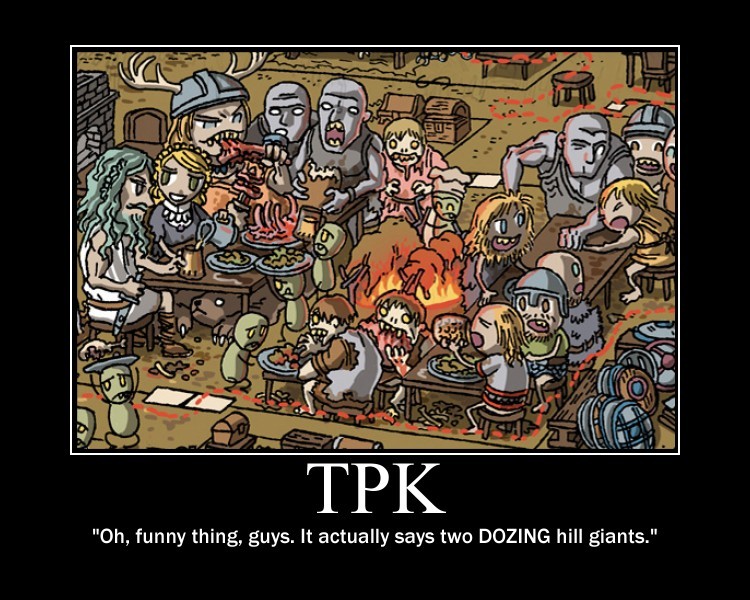
+John Marvin - TPK Anyone? at http://dreadunicorngames.com/

+John Clayton - Fatality! at http://blog.filesandrecords.com/

+Peter Smits - PCs and the killing there of at http://planeataryexpress.blogspot.com/

+Arnold K. - Lethality at http://goblinpunch.blogspot.com/

+Evan Franke - To be or not to be . . . a Killer GM at http://asageamonghisbooks.blogspot.com/
Tuesday, March 3, 2015

Nuts & Bolts #22 - Game Masters’ Roundtable of Doom #3 - Delta GM


This month's topic comes to us courtesy of Scott Robinson, who asks,
"How has your gaming and/or GMing changed over time?"
This is a tough one. I've been gaming since the early 90's, and GMing that entire span. From m
y early days with games like TMNT & Other Strangeness, to my current campaigns run with Cypher system, I've been GMing for over twenty years.

So why is this a tough question? Because sometimes you can't see the forest for the trees. Some changes are certainly greater than others, some are subtle, and some become confused by the transition between one preferred system and another.

I've been thinking about this question for nearly the full month since we got it. It's been in the back of my head, growing as I try and figure out how to answer it.  Here's my best attempt, and I'd wager that if asked six months from now I could come up with different answers, but such is life.

Rule Lite versus Mechanics Driven

When I started playing it was with the Palladium system. Palladium's system isn't the most rules intensive that I have played (that would probably go to Shadowrun), but it is a very prescriptive system, with rules for much of what could occur, dozens of skills covering a seemingly endless range of abilities including weapon proficiencies divided up into a couple dozen categories. Contrast that to what I prefer to play now, games like Cypher system where weapons are either ranged or melee, either light, medium, or heavy.

Simplicity goes a long way to streamlining play, and that has become something I look for in rules. I want the game to establish a common framework for play, and then I want it to get out of the way. As a player and a GM I find it more entertaining to cooperate with the others at the table than to follow the dictates of a codified set of rules that state what I can and cannot do.

Preparation

I used to try and force the story I wanted to happen. It's as simple as that. I was a bit railroady in the early days. I seldom played pre-written adventures, so I had the ability to adapt where needed, but I also had a strict idea of what it was I wanted to happen. By comparison I usually don't come to the table nowadays with more than a starting scene, and vague idea of what the NPCs are trying to do, and a rough set of end points that I expect that players may well never see.

It's hard to pinpoint what transpired to generate this change, but I can pin it down to my time in college and two specific campaigns, on as player, and one as GM.  As the GM I had this elaborate plan for the game, it was going to be "epic" (in all the worst ways a GM can use that term), and within the first session the players had jumped the rails so hard that I was left with a campaign that would no longer run as I had planned it. They had "ruined" my story. That was probably the best thing for me as a GM, because I realized that the players could always do something so unexpected that anything planned could be rendered moot.

The second was as a player in a game where the GM was running an adventure series published as part of the official game meta-plot. While it was an interesting story, it felt like we were limited to moving between scenes to gain exposition from various sources, and to occasionally kill something that needed killing. I'd never been railroaded so hard before. I can't blame the GM, it was their first time behind the screen, but I did get to see for myself what horrors could come when the players have minimal control of the story.

When I play I look for the interesting, sometimes even at my own expense, and when I GM I am more than willing to allow the players to go off book however they want. Thankfully these were lessons learned the first time out.

Environments Make the Scene

This is probably the one I have the hardest time with still. I've had my high points and I've also had my lows. It's the thing I try hardest to keep improving at, even after all this time. Let's paint a picture by way of example:
The group is protecting a shipment of top secret electronic components as it is shipped cross country. They are agents tasked with ensuring national security, and the enemy would do "bad things" with these parts. The enemy attacks, ninjas and thugs rush the players and the semi-truck under their protection. A battle ensues ...
Kinda bland right? There's no environment, no setting. Is this in a warehouse at night with crates stacked high and maze-like around the truck? That'd certainly make things more interesting. What if the truck was on the highway, doing 70mph, and the attackers rode up in high powered vehicles to hijack the shipment on the road itself? What if during that hijacking the agents ended up on the roof of the trailer fighting of ninjas and having to duck the overhead road signs?  I actually did that in a game. It was Palladium's Ninjas and Superspies RPG, and the ensuing martial arts showdown became a thing of legend that we remembered for years after.

I didn't realize at the time that it was the environment that had made that scene pop the way it did. Limited space to fight, the risk of tumbling off onto the highway (and into the path of other vehicles), fast moving road signs that afforded limited clearance; all of those things added to the excitement of the scene, and added interesting ways for the players to deal with their enemies without simply beating their hit points to zero.

I can't claim to be an expert at this, and I have certainly had my fair share of bland encounters, but I keep my eye on the goal of trying to come even close to that highway showdown. And one last piece of advice: if the GM gives you the option to hit the deck, or try and jump over the incoming roadsign, choose the former. As my best friend at the time found out, hitting a highway sign at near 80mph does tend to hurt, and being left behind doesn't help either.

Characters with Character

The last bit that I see is how I create characters and breathe life into them. When I was younger anything beyond what was needed for the character sheet was rare and optional. The idea of having a detailed background, some private motivations, and history wasn't one that seemed all that important, and it certainly wasn't something I felt was needed prior to starting a game.

I can attribute this change to my time playing Play-by-Post forum games. When you are writing your character you have the time and space to get detailed, to look at how the character perceives things around them, and to crawl into their headspace and find out what they are thinking. We approached those PbP games like a co-operative novel that happened to follow a singular director under the auspices of a framework of rules, and in the process I found that the more I put into the character the more I got out of the game.

I may not come to every game with a three page character bio, but I do what I can now to put together a couple of paragraphs at minimum. I keep in mind who they were, who they are, and who they might want to become as I play. I get more out of the games I play in that way, and I can only hope that the other players and the GMs get more from those efforts as well.

~~~~~~~~

So there you have it folks; how have I changed as a player and GM? I put more character in my characters, I make an effort to make the environment interesting to make the scene interesting, I've veered to rules lite systems, and I temper my preparations with the ability to be flexible and change my plans according to the actions of the players.

~~~~~~~~~~~~~~~~
Game Masters’ Roundtable of Doom

The Game Masters’ Roundtable of Doom is a meeting of the minds of tabletop RPG bloggers and GMs. Every GM has his or her favorite system, but in these articles we endeavor to transcend a particular system or game and discuss topics that are relevant to GMs and players of all roleplaying games.

If you are a blogger, and you’d like to participate in the Game Master’s Roundtable of Doom, send an email to Lex Starwalker at gamemastersjourney@gmail.com and supply the URL of your blog.

Want to see some other blogger's takes on this subject? Check out:

+James August Walls - Home Grown Gaming at http://ilive4crits.blogspot.com/

+Scott Robinson - The evolution of my gm style ... at http://strangeenc.blogspot.com/

+Lex Starwalker - My evolution as a GM ... at http://www.starwalkerstudios.com/blog/

+John Marvin - Ringing out the gm changes at http://dreadunicorngames.com/

+John Clayton - Plans that either come to naught ... at http://blog.filesandrecords.com/

+Peter Smits - Adventures, planar in nature at http://planeataryexpress.blogspot.com/

Tuesday, February 3, 2015

Nuts & Bolts #16 - Blogger Roundtable #2 - Spare Parts

This month's prompt:
What is a favorite mechanic or idea you've encountered in an RPG that you think would work well in other games? Please explain the mechanic/idea, tell us a bit about the game it comes from, and give some ideas of how it could be used in other games. You can discuss more than one mechanic or idea if you like.
OK, that's a doozy, a great topic, but one that I've already touched on previously. In fact this is going to be a short blog because it's going to spend a lot of time pointing to other posts I have written previously, but that's OK.  So I'm going to give you my Top 5, and make up for the lack of new material with a whole lot of referenced old material!

Honorable Mentions
These are already written and worth mentioning anew, but for various reasons they don't really fall onto the list.
  • The Stunt Mechanic from Dragon AGE is great, but its not something easy to port to new systems.
  • GM Fiat, is something I like as GM, and a lot of games nowadays have it in some form or another, so I don't think it counts, but it's worth mentioning.


#5 - No GM Dice Rolling

I love love love how the Cypher System frees the GM from the shackles of dice. This mechanic would be higher, but converting it to other games would take a decent amount of work, and some games just wouldn't really work "right" with asymmetric dice rolling.

#4 - Complications/Trouble Aspects

Trouble Aspects come from FATE, and Complications (at least as I know them and am referring to here) come from Mutants & Masterminds. These two games couldn't be any more different if they tried. One is a crunchy, point-buy, mechanic driven, d20 based, supers game, and the other is FATE. They do have one thing in common though, they don't just encourage character faults/flaws, the require them. At char gen.

In FATE your Trouble is an aspect of your character that is designed to be if not negative, at least somewhat troublesome for the character. It's the part of the character that can most easily get pinged by the GM for a bit of fiat, or a Compel as FATE calls it. If your Trouble is "Curious to a Fault" the GM can use that whenever a mystery and the character cross paths to drive that character to investigate, often to the detriment of whatever else is going on at the time.

In Mutants & Masterminds Complications act the same way. M&M Is a superhero game and character Complications can take the form of secret identities, relationships (often with non-heroes, sometimes with villains!), flaws in the character's super powers (kryptonite!), and the like. Much like a Trouble, these are leveraged by the GM as a way to pull the character in two directions at once (and Superman save Lois AND stop Luthor???), expose a character to their weakness, or put them in a situation where they have to try and keep their identity secret.

Strip away the specifics and both Complications and Trouble Aspects are meant to give the GM additional information about your character and to fill them in on some of the character less stellar points. Most people find that a flawed hero is a more interesting protagonist and that works as well in RPGs as it does in cinema. Even a fantasy dungeon crawl game can benefit from this. It may be tied to class powers (somatic components anyone?), or even be a class feature (preferred enemy). It could also be a piece of minor color (the cleric is a lecherous man who has to struggle against his vow of celibacy).

Regardless it gives the GM a tool or two and it gives the characters more depth, both of which are good things.

#3 - Scaleable Results

It's a little odd to be including this since I would not have thought of it a month ago. Usually When I see systems like this they are somewhat ... vanilla. If you hit x number beyond your target you get a little extra damage, or a little better effect, a lot of times its nothing to write home about.

And then I played Dungeon Crawl Classics. +James Walls gets a little credit here, as it's his fault I played it, but after seeing the crazy scaling of the magic spells in that game ... boy howdy do I wish more games had similar mechanics. Going from a single magic missile to a volley of ball lighting that each tract a separate target? HELL YEAH! A single paralyzing touch becoming a scattering blast of paralyzing rays? YES! Sure these kinds of boons aren't something that will happen a lot, but that's half the point, the difference between just passing a spell check and blowing it clear out of the water SHOULD be big, and DCC sure as hell delivers, granting eight distinct levels of success on most spells. Your Holy Sanctuary could grant a mere +1 for a single turn if you just squeak by, but with a big enough roll you can permanently sanctify a 10,000 square foot area!! (That's ~930 square meters for you metric folks!)

I've seen scaling result bonuses in other games, but it wasn't until DCC that I saw how awesome the could be if game designers allowed them.

#2 - Bennies

I like stuff that let's players control their destiny just a bit more. I already did a blog post for this though, so check that out.

#1 - One Unique Thing

Yup, I already did a blog post about this one too. The best part about the One Unique Thing is that it's 100% portable to other systems without any work required. As a non-mechanical way to further develop character and help engage the players in the game world from day one it can't be beat.

~~~~~~~~~~~~~~~~

So that's that; my favorite five things to steal from other games (at least for now). Hopefully you maybe try some of them, but even if you don't maybe this got some wheels going in your head about what stuff you like that you can steal for other games.

Want to see some other blogger's takes on this subject? Check out:

+James Walls at http://ilive4crits.blogspot.com/2015/01/when-is-it-players-turn-mouse-guarding.html

+Scott Robinson at http://strangeenc.blogspot.com/2015/02/aspects-as-near-universal-design.html

+Lex Starwalker at http://www.starwalkerstudios.com/blog/

+John Marvin at http://dreadunicorngames.com/2015/02/04/bloggers-roundtable-of-doom-the-montage/

+John Clayton at http://blog.filesandrecords.com/2015/02/instant-backstory-just-add-imagination/

Tuesday, January 6, 2015

Nuts & Bolts #12 - Blogger Roundtable #1 - Inclusivity

Starting this month I'll be taking part in a round table of sorts with other bloggers who work within the Cypher System. It's all organized by +Lex Starwalker and with luck it'll be a really cool "discussion" of sorts each month.

This Month's Topic:
How would you, as GM, encourage role-playing in a player who doesn't role-play as much as you'd like, whether it's role-playing with NPCs, being more descriptive in combat, or referring to themselves in the third person. If you want to take the role-playing at your table to the next level, how do you get your players on board?
~~~~~

Hmm, how to encourage a player to role-play more? Well in my mind I can see a couple of ways ...

Set some ground rules/expectations up front

This works well if you do it for the whole group, even if the other players are already on board, and if not it reminds them as well and sets things up. If you are going to run your game a certain way and expect a certain degree of role play this is probably the right way to start. This let's you set the stage for the next couple of suggestions as well.

If you are going to treat table talk as a in character talk unless the players call a halt that sets an expectation, it will probably tamp down on the goofball comments and lead players to be a little more on task but it might also kill some of the fun and be a little too "all in" for people new to the hobby. Likewise is you expect the players to speak as their characters and elaborate on in character actions and tasks telling them up front helps to prime the pump.

Lead by Example

This probably (maybe?) goes without saying, but players will take their cues from the GM. If you are telling them what an NPC says they will tell you what their character says, but if you speak as the NPC (stutters and accents optional) that will help encourage players to act as their characters and speak to the NPC rather than to the GM.

Similarly if you want more detailed descriptions of combat actions then providing the same for the monsters will only help. "The orc hits you" is not the same as "[bellow of triumph] the orc's maul crushes in your breastplate and sends you reeling backward!" Putting the effort in on your end should encourage the players to do the same.

Co-opt the Other Players

Players take their cue from GMs, but they also take their cues from the other players at the table, for both good and ill. Most GMs probably have seen how certain players can sway a game to greatness, or drive it straight to the land of Monty Haul. If you have access to one of the former ask them to help you get the rest of the group (or a specific player) to step up and role play more.  If they are already inclined to such play they may already be on board without being asked, and if they are on the fence you might be able to sway them simply by asking nicely (or you can resort to the tactic below).

Regardless if you have four players and three are heavy into the RP that will help the fourth to find their footing.  It may not be instantaneous but hopefully with time and encouragement from you and the other players it will happen.

Encourage Through Rewards

When all else fails try a little bribery.  Offer a bounty of bonuses or experience (depending on the style of the game and system) for good RP.  Grant small amounts of extra damage or bonuses to attack for well described actions.  Give small discounts for good interaction with NPCs and vendors. A little goes a long way, but make sure that the rewards are immediate and tangible.  A 1% discount wont cut it but 10% will.  Depending on the system a +1 might work, or and extra die, or some other such bonus.  Given them out for good examples of what you want to see and as the group responds up the ante on what it takes to earn the bonus to help drive them to improve. 

Unfortunately bribery has a cost and it's that in the long term you will be stuck giving out such bonuses and discounts, but if the players are role playing better for it, it's still a win.

~~~~~~~~~~~~

Want to see some other blogger's takes on this subject? Check out:

+James Walls - Love 'em or Leave 'em - RPG Players who Don't RP at http://ilive4crits.blogspot.com/

+Scott Robinson - Encouraging Role-playing at Your Table at http://strangeenc.blogspot.com/

+Lex Starwalker - How to get better roleplay from your players at http://www.starwalkerstudios.com/blog/

+John Marvin - How to encourage roleplaying at http://dreadunicorngames.com/