Wednesday, March 23, 2022

Nuts & Bolts #169 - The Perfect Map for the End of the World Part 2- Puttin' My Money Where My Mouth Is


Last week, I wrote about finding some old road atlases and thinking they could be great for making maps for Post Apocalypse games. Well, this week I put my money where my mouth is and show off the results of the last week worth of efforts, including the techniques I used to get there!

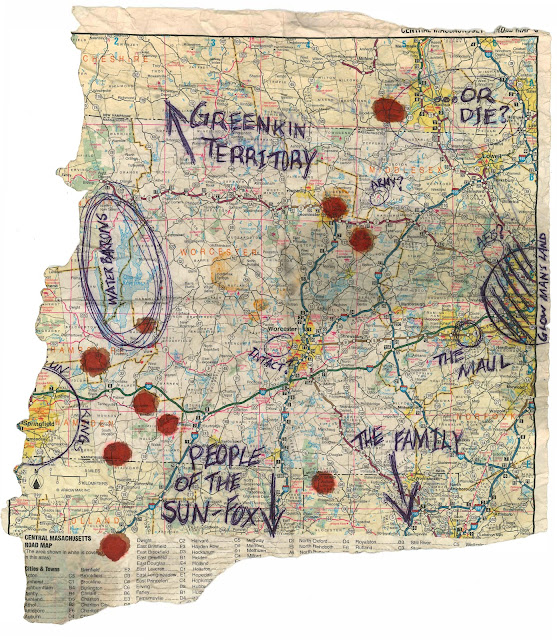
The map above (which is nice and high resolution so feel free to use it if you want), depicts central Massachusetts. I tore it out of the atlas, grabbed a pen and got to work. As it had been quite some time since I last did this I documented my process and had to figure some stuff out the hard way. Example: the aging effects I used can cause ink pens to run if they are water soluble, and even some run will happen if they are not, I used a black pen and ended up with fairly blue lettering after multiple soaks. Know your materials and consider your order of operations. 

The first thing I did was put some notes onto the map. Again I used a black ball-point pen, but as you can see from above it ended up looking more blue. This is fine, but was a result of my doing the writing before the "aging" effects. Here's what the WIP (work in progress) looked like before I started aging.
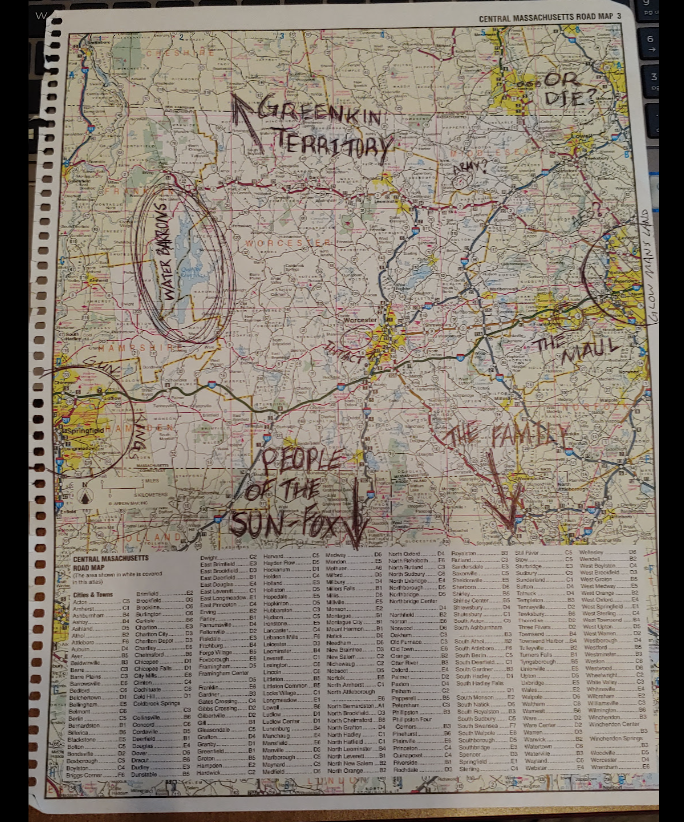


You'll also note there's a lot more there than in the final. I decided early on to burn off the ripped dangly bits on the left side, and tore off a good chunk of the legend since that would make finding locations a little more difficult. That gave me the nearly final size and shape of the map.


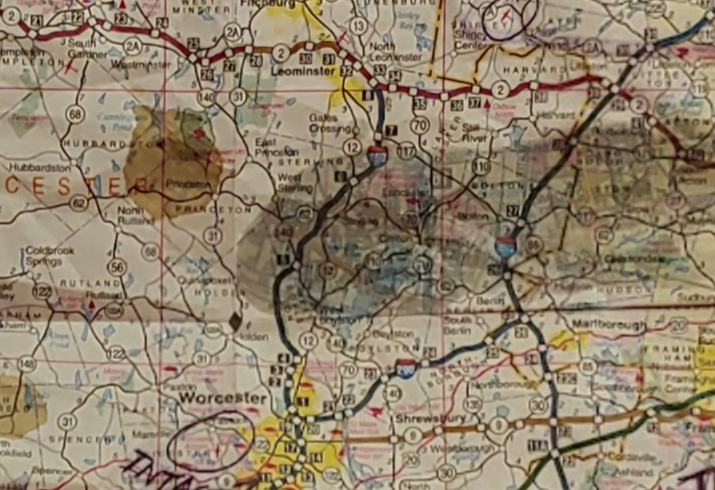
The above picture is in a weak soak of tea. Weak because I tried to re-use a used teabag from my morning caffeine infusion. You can already see the lettering turning more blue in color. This may or may not suit you and your preference for pen style. I know I will probably do aging before writing on my next map. I ended up sacrificing a new tea bag to make a second soak because I wanted my result to be a bit darker. I also crumpled and un-crumpled the paper a few times before, between, and after each soak, I was looking for a final result that had that soft and more cloth-like feel at the end, which I think I managed really well. 

Between the first and 2nd soak I also tried to put some stains in using a little cooking oil and some soy sauce (it's what I had on hand!) followed by some hot sauce (Frank's Red Hot btw). While the oil worked the other two ended up being very minimal in the final product. 


After the second bath in tea I was happy with the state of the paper but it felt like it needed something. My focus group agreed, and suggested some blood spatter would look good. I wasn't willing to bleed for my art, so I tried red food coloring. It was way too bright.

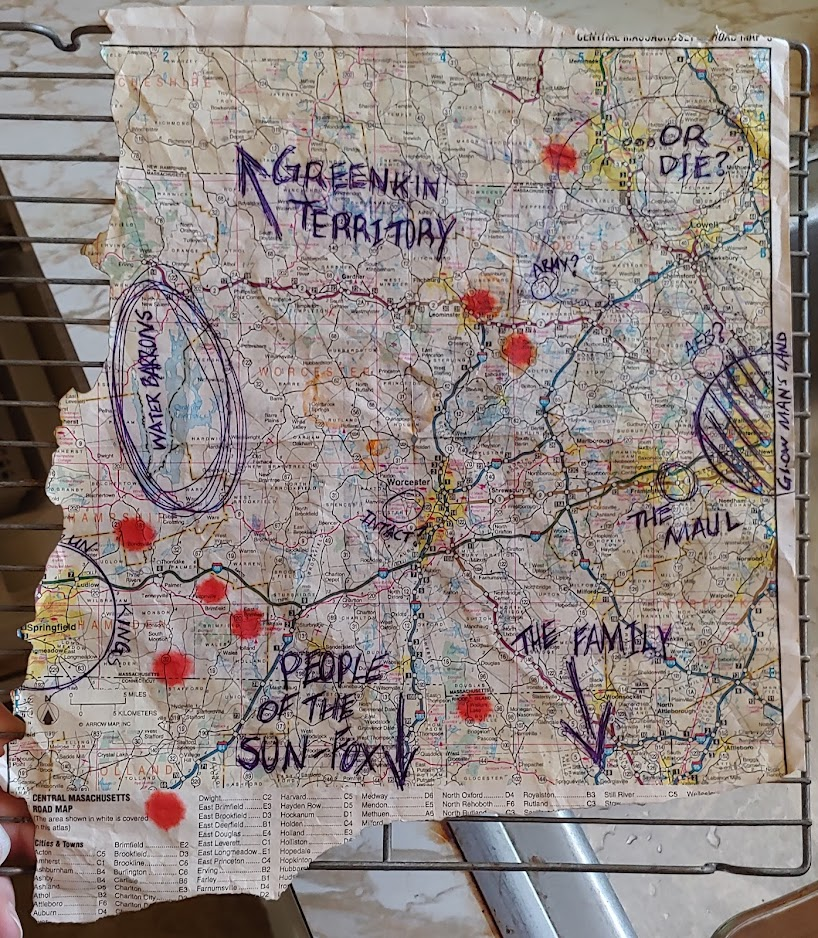
It looked far to red for an old blood stain, blood usually dries to a darker brick red/rust color so I needed to add something to the dots to darken them. I did some experiments on the side and found that Dark Soy Sauce (a specialty product for most folks) worked well. I think that dark coffee might get a similar result. You want something that will only darken the red, not cover it. I'll try coffee the next time out. These were all applied using the end of a chopstick to dab the paper. I wanted to avoid a paint brush. A fingertip could also work, or the end of a fork. Test on a sheet of scrap so you don't ruin you badass map. 

In conclusion what I did was:
  1. Write my on-map notes
  2. Burn edges and/or tear pieces off as you like
  3. Crumple liberally
  4. Soak with tea then dry fully
  5. Crumple liberally
  6. Spot stained then dry
  7. Second Soak and dry 
  8. Crumple liberally
  9. "Blood" dots 
  10. Crumple liberally
Based on my learnings though I think I would consider moving my first step till after the soaking is done depending on how "new" you want said notes to seem on the paper. Generally I am pretty happy with how it looks, although even the hi-rez scan above doesn't quite get the colors right. WHat I am very happy with is the physical presentation. In person it looks and feels like a well worn wasteland map that the characters might be given or find. Sadly in person games are still some ways away, but just making this has been hugely fun and given me a real hankering to run some post apocalyptic fun. I hope it will for you too!

An aside: The aging techniques, use of tea soaks and crumpling of the paper, can work for old treasure maps and the like for any genre. Use the basic idea here for your fantasy RPG of choice.

Or don't, I ain't the boss of you.

Wednesday, March 16, 2022

Nuts & Bolts #168 - The Perfect Map for the End of the World


I'd wager, if you are of a certain age, you have memories of fighting with one of these dang things while trying to figure out where you are, where you need to be, and just how lost you really are. These days we all carry interconnected super computers in our pockets and take for granted that they know our location to within a handful of yards (or meters if you aren't in the US), but when I was younger, and especially when I was a kid, these were the closest thing we had to navigation aids. 

And damnit the post-apocalypse was better for it! 

Yes, the post-apocalypse. Back when I first started wandering the wastelands during my after-school hours the very idea of GPS and computer navigation was science fiction. The kind of science fiction that didn't belong in a good old fashioned post-apocalyptic wasteland! The idea of wandering the wastes with a tattered a stained fragment of an old paper map felt right at the time, and for me it still feels right. It has a low-tech tactile aspect that works in a ruined world where "treasure" was usually represented by physical goods and items, and where knowledge that wasn't part of a skill was often lost. The kind of wasteland where a waster stained encyclopedia was a tradable item. 

While cleaning my basement I found these three atlases, and was about to drop them in the recycle bin, after all, my phone does everything these do, but better. And then I got an idea. I'm prepping to run some post apocalyptic something later this year and ... why couldn't I use these for maps? I could tear the pages out, stain them with coffee or tea, mark them up with pen and marker, and then either hand them to players or take a picture for those internet games that most of us have found so much more convenient. 

Also, it was super timely as I didn't have a good topic for today. Ha!


Wednesday, March 2, 2022

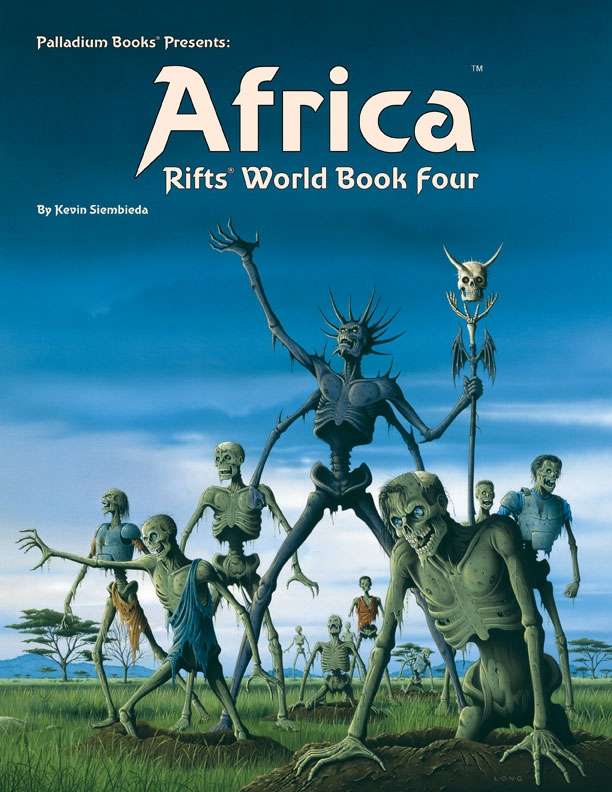
I'm A Fan - Rifts Africa Style Necromancer


Been thinking about necromancers lately because of the Weird Frontiers game I'm running for some friends. Necromancers tend to be a "pet class" in my experience. They have skeletons and zombies and other undead "pets" that follow them around, follow their orders, and generally provide a lot of the substance of the class. Beyond the pets they also tend to have dark magic attacks, debuffs, and the like. So all of that said when I first got the 4th Rifts World Book, Africa, back in the mid 90s I was very pleasantly surprised by the very unique take on necromancers the book detailed. 

The rifts style necromancer could still animate the dead, and do all the usual necromancer standards, but in addition they could collect pieces of dead creatures and temporarily fuse them to their body with magic. These magical fusions would provide various special abilities and bonuses. A wolf's skull would give the necromancer a werewolf like visage complete with a powerful bite and wolf-like senses. The shell of a tortoise would act as a powerful armor, but slow the necromancer's speed and reactions. Tiger's claws would make for a deadly melee weapon. These ad hoc magical enchantments provided both a lot of interesting flavor for the necromancer, but turned a class that is often "rear guard" to a class that could be forefront. 

Now, I haven't played Rifts, or really anything using Palladium's system, in decades, nor do I want to, but I find myself thinking that the ideas and concepts that made this version of the necromancer interesting and fun to me, could work just as easily in any other system. For example, for an NPC necromancer in DCC or Weird Frontiers. Or potentially as a new focus for a Cypher System game. 


Wednesday, February 16, 2022

Rulings Not Rules #4 - Delayed Actions


Has this ever happened to you? You turn to a player and say, "It's your turn, what are you doing?" In return you get perhaps an uncertain look, maybe even a sheepish smile, and a request, "Can I delay my action?"

Listen folks, I don't if this happens to you a lot, and I don't know if it bothers you, but I have a low key hatred of delayed actions. Now, don't get me wrong, there are times and places where it makes sense. Ambushes are essentially all about delaying your action until the mark is in place, and I am fine with that, but when combat is rolling delayed actions bother me in a way I find difficult to articulate. Maybe it's the fact that combat in most RPGs is based on rounds that are around 10 seconds long (though obviously there is variation in both directions). Or maybe it's the indecision that seems to come with the request, when, in fact, the character and player both should be in action mode. 

Regardless as to why I dislike them I suspect that it will never be a problem that goes away. As such it's a problem I need to solve for myself for games I run. Specifically I mean for Dungeon Crawl Classics (and related games) which I tend to be running more often these days, and in DCC there is no specific rule for (or against) delaying actions. 

Rulings not rules, right?

So, then, how do I run delayed actions? 

1) Specify the action.

You can't just delay your turn without a plan, combat just is too fast and as we all know initiative is just a means for us to adjudicate things are are really happening basically simultaneously. So the first thing I need is a specific action. What is the thing that will happen? An attack, a move, a spell ... it must be specific with a target and...

2) What is the trigger for the delayed action?

I don't allow a delay without a clear trigger. Maybe you are delaying an attack on the big bad until the cleric blesses you. Or you are delaying a charge until the thief opens the door. Or delaying a fireball until the end of the round so the other players can get out of the blast area. 

3) (optional) A cost for the delay.

I have only just started thinking about this but I am leaning toward pushing the delaying character's initiative on future rounds to the step where they act with the delayed action. If you roll a new initiative every round you might penalize that character a die step if you wished. Alternately you could do nothing. Characters who delay tend to have higher initiative values and if they are quick to react in that combat maybe that's just fine. 

That's all. It's nothing complex but it prevents waffling, and it ensures that the action can move forward quickly. Combat is fun but it shouldn't take up the entire session and keeping it moving quickly is one of my biggest goals as a judge. 

Wednesday, February 9, 2022

Nuts & Bolts #167 - Multiple Action Dice (DCC& MCC)


Let's talk about multiple action dice, or multiple actions per turn. 

I've played a lot of games that dealt with this in many different ways. In games were its more common characters might act across multiple initiative passes, where each character acts once, then you roll through initiative a second time, and then a 3rd or even 4th until all characters have used all their actions. This can work well for those games where all characters have at least 2 actions as it spreads the in game action around the table more evenly, but might not work as well when some characters only have a single action and others have 2 or 3 or more. 

For DCC and MCC this could work well at higher levels once characters get second action dice. This would allow a cleric or wizard to buff a fighter and have that benefit be gained in the same round regardless of this initiative. It would also prevent a bad initiative roll for the bad guys to just result in an utter beatdown. There are other alternatives though...

Which is where a second option comes in. I use this for creatures in DCC and MCC as it works well at to spread a single creature or a group of creatures actions around those of the characters. In this case it comes up less often for players (though it can, especially lucky MCC mutants), and more often for monsters and other creatures. I'm of the mind that a good combat in these games should have at least 1 monster action for every 2 PC actions. That ratio has some flexibility but 6 players vs a monster with a single action is likely to be a very boring combat. In these such cases I roll an initiative die for each action die the monster has. So a creature with 3 actions will roll 3 initiatives and get an action at each point rather than 3 on a single initiative value. This does require slightly more bookkeeping, but it also ensures (usually) that the monster goes throughout a combat instead of multiple actions back to back. This makes the combat more dynamic, and can allow the creature to direct its attacks in such a way that clever players can react and potentially avoid getting repeatedly beat down. With groups I use a unique initiative for each member of the NPC/monster group in the same way. 

You might be thinking, that seems like a lot to keep track of at the table, and its true. If I were playing in person more often I doubt I would do so, but since I do most of my gaming online I can easily keep a roster of PCs and NPCs in an Excel (or other spreadsheet) file and then sort on their initiative values for an easy way to run through combats. 

It works for me, and I feel like it keeps the players on their toes a little more during combat. 

Wednesday, February 2, 2022

Rulings Not Rules #3 - Craft Everything!


I don't know if this is a "me thing" or an "old school" thing, or what but I notice that not everybody seems to look at every strange resource and every defeated creature, as a source for potential new gear. To me there is an almost instinctive process of evaluating materials in RPGs for future use in upgraded gear. New weapons, new armor, or new tools. 

Example from this past weekend's game:

My cleric of the mountain lord finds a vein of strange glowing rock deep within a cave. Looking at my gear I see that I have the right tools to extract a hunk of it and tell the Judge that I want to do so with the aim to be able to carve a new hammer head from the strange rock. If nothing else I figure its an opportunity for my character to upgrade his primary weapon and holy symbol to be a cool glow in the dark fashion accessory. 

Does this glowy rock have other strange properties? Will I end up with a one of a kind magic item for my efforts? I don't know, probably won't know for a few more sessions. For the moment though I can imagine it'll be something awesome until proven otherwise.

As a player that is my mentality: look at what the adventures give me, and find ways to use the materials and tools in new and creative ways. It's like a mini-game for me. When I run games I am very receptive to the same behavior from others. I see some players engage with the game at this level, building new items, or upgrading existing gear, and I think it makes for a better experience for all at the table.

As I also tend to play and run a lot of post-apocalyptic RPGs this both comes in very handy and feels very true to the genre. That said I see no reason why this cannot work in fantasy RPGs, or even some kinds of sci-fi. Advanced materials, rare minerals, and the like all fill this niche. Heck, much of the aesthetic of Dark Sun comes from the settings infamous scarcity of metal and the resulting propensity for weapons made of natural materials such as bone, chitin, and shell. 

These kinds of gear also allow players to exercise a level of aesthetic control over their characters that may not normally come up in games. Crafting all your gear from the chitinous hide of a certain species of giant insect will not only give your character a unique look but it will telegraph to the NPCs that the character is (presumably) skilled at dispatching said creature. Armor made from destroyed robots, a macuahuitl lined with teeth from slain dinosaurs, or a bow carved from the rib of a vanquished dragon! Keep your eyes out for opportunities to make your gear as cool and unique as you deserve then work with your GM to make it happen!

Still, I am curious if this is something fairly normal or something unique to certain kinds of gamers.

Wednesday, January 26, 2022

Remember When: The Adventures of Brisco County Jr.


The many versions of "weird western" out there all seem to have the same thing in common: small but dedicated fan bases, and an utter inability to catch on in the mainstream. Even Deadlands, the RPG heavyweight for the genre is a niche product in a niche industry. On the screens both large and small we have had a number of attempts, most of which never fully catch a wave. 

In 1993 we got the steampunk sci-fi "The Adventures of Brisco County Jr." on Fox. On Friday nights. Yeah, this show was all but destined to be a one and done series and, while history shows that the show managed a full season order, in the end that was not an inaccurate prognostication at the time, and yet for myself and man others this show remains a fond memory in TV history. Bruce Campbell had (and still has) more than enough charisma to lead a series, the writing was snappy and smart, and the weird season 1 meta-plot with a time traveling golden orb from the future that could empower people with incredible abilities remains a fun way to stitch together the shows few episodes and tell some really different western style stories. 

Maybe its the old nostalgia glasses painting a rosy view of a B-grade show, or maybe it was just as ahead of its time as another sci-fi western that Fox would kill in the Friday slot just a few years later. All I can say is that I have fond memories and that it has colored aspects of my gaming for nearly 30 years.


The primary antagonist was outlaw John Bly, played by the always excellent Billy Drago. Bly was trying to obtain the mysterious golden orb and had killed Brisco County Sr. setting off the events of the series. The orb, we would learn later, was sent from the future, and had numerous ill-defined powers: basically it was the perfect MacGuffin, it was powerful, cool looking, and the good guys really didn't want the bad guys to get it.

I've recently started playing the DCC inspired/adjacent Weird Frontiers RPG, and I think I am going to need to design an adventure, or adventure arc, around a mysterious orb, a time traveling villain, and the heroes who stand to prevent darkness falling upon the land. I wish we had more of this show, and more weird western genre mash ups in our lives. This, Firefly, Cowboys and Aliens, Wild Wild West (and its 1960s TV origin The Wild Wild West), give us fans brief and fleeting views of what could be and what could have been. I can't help but wish that we had more of all of it.

Wednesday, January 19, 2022

Nuts & Bolts #166 - Hacking the Cypher System: Predation


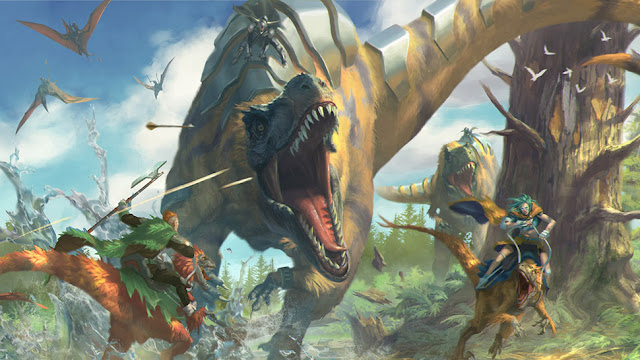
This past weekend I got the chance to play Predation again for the first time in a long time. The session was fun and I was reminded about how interesting the setting was. I was also reminded how the characters each have a dinosaur companion and how each player at the table role-plays the companion for another player. 

After the session I got to thinking about how the companion mechanics were fun, but...

That but really got me though. But, it was sometimes tough to juggle two character sheets. But, it was difficult to remember who was playing which character and which dino (this was exacerbated by using Zoom so it wasn't as easy as just looking to ones left or right). But, I was having a lot more fun with the dino companion than I was with my human character.

Lots of buts. That last one was the kicker tho. I really did have more fun playing a prehistoric chicken than I did playing my (checks papers) Creative Osteon who Crafts Unique Objects.

I wonder if there is any reason why one could not instead split your players roughly into two groups and have half of them play people, and half of them play dinosaurs. Give the dinosaurs actual types and foci to make them more fully realized characters. Problem solved?

Well, doing this would make play a little easier as you wouldn't have to try and play two characters at once. It would also mean less to track for the GM and other folks at the table. It would allow players to get more fully into character since they wouldn't have to worry about the companion dino for another player, or for their primary human. Best of all it would allow for a lot of role-play between players at the table. Imagine the player-player relationship between a "Disobedient t-rex" and an "Uptight scientist," or between a "stealthy warrior" and a "clumsy brontosaur"! By cutting the number of characters in half and allowing the dinosaurs to be more fully realized I think you could gain some really interesting role-play at the table that would otherwise often be minimized during play.

Of course, if you prefer Predation as it stands right now you should keep enjoying it, but I think if I run a game in the future I may consider this as an option to allow the players to choose before we start.

Wednesday, January 12, 2022

Rulings Not Rules #2 - Missed Opportunity: Fear of the Dark


I hate missed opportunities. You always feel a little bad, no matter how much confidence you have in your own abilities as a Game Master. One of my players pointed this one out to me after the session, for which I am very appreciative as otherwise I might have not noticed my error and would not know to fix it later. 

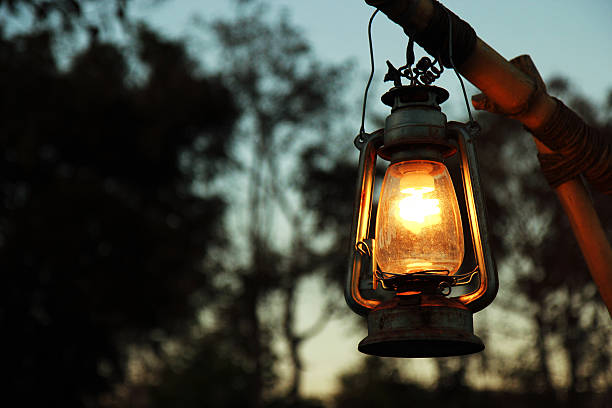
In this case it was, once again, a game of Weird Frontiers. During a combat in a dark cave against some undead, the lone character with a light source fell. The lantern hit the ground. A quick roll to see if it stayed lit came up as a fail. The characters and the undead were plunged into total darkness. 

Total darkness.

While fighting undead.

For level zero characters. 

Now, Weird Frontiers has a mechanic called "Grit" which measures a character's guts, gumption, bravery, sanity, etc, The mechanics are simple enough, a Will save vs the source of the fear or horror, and if you fail you lose some grit and suffer a fear effect based on how much you failed by. 

Easy right? And yet as the Judge I just never thought to call for a Grit Check as the combat plunged into darkness and flailing about blindly. That was my missed opportunity. 

I shouldn't berate myself too much, but as I am trying to evoke a mix of western, horror, and action ... I missed a beat that could really have tied those genres together nicely. 

The next time it happens I'll certainly be better prepared. I've learned from my mistake (such as it was), and I'll remember, hey the dark sucks, and when something is trying to kill you it sucks that much more.


Wednesday, January 5, 2022

Rulings Not Rules #1 - Dynamite


As this is my first post in a while, and intended as the first in a series, I'll offer some explanation:

Rulings Not Rules is going to be something similar to my Hacking the Cypher System series. Instead of focusing on system hacks however its going to be where I can take a moment to reflect on off the cuff Rulings I make at my table during play to keep things rolling forward. This is especially useful in the space of my games within the Dungeon Crawl Classics extended family, as there are often times that come up in session where a ruling is needed either to prevent having to check the book, or because the book lacks the required info. 

OK, that that out of the way...


Dynamite!

What weird western RPG is complete without some ill advised use of that most iconic of explosives? 

Here's the thing with dynamite though. It's tricky, dangerous, and just because its as easy to use as lighting a fuse, doesn't make it idiot proof. Especially when a character wants to use it in the heat of combat at the spur of the moment. 

The situation: 

A large ritual chamber, the BBEG is working a ritual to raise a spirit from the beyond. The party is also dealing with bone golems and their general ineptitude (this was a level Zero "funnel" adventure). A character decides to place dynamite on the ritual altar in hope of stopping the BBEG with a boom. The character is not a miner, or any other relevant occupation, and has not previously used dynamite. Not possessing a death wish, they desire to place a 10 second length fuse. 

Now, here's where the rulings come in. Perhaps obviously there are no rules for determining proper fuse length for dynamite whilst in combat. So I asked myself in the moment, "Would it be fun if there was a chance that the character got the length of fuse wrong?" The answer was, 100% Yes. 

100%.

Yes.

So, Weird Frontiers has a Luck stat, and I asked for a luck check (a d20 roll under or equal to ones Luck at my table). In my mind the accuracy of the fuse was going to be the intended duration (10 seconds) plus or minus a die roll of d5 seconds. A successful luck check would be PLUS the d5 (because hey, at least it didn't go off early before you could flee), and a failed luck check would be MINUS the d5 (oh no, I'm getting blown up!). 

Needless to say the dice said to heck with you! A natural 20, which is a fumble result on a luck check. Not just bad luck, but horrifically bad luck. So, what to do? Clearly 10 seconds minus d5 seconds was my intent for a simply failed Luck check, but now I was looking at a fumbled Luck check. If 10-d5 seconds was bad, what does worse look like?

I decided to buy myself a few moments to think while the other player at the same Initiative value acted. Their character shot the fuse to activate the dynamite. Now, I don't know if that would work in the real world, but rule of cool 100% applied here. I did remind that the players that dynamite is just nitroglycerine that has been stabilized and is still prone to explosions from high impact; so a miss would be very bad. I also declared that the fuse, being rather a small target would be AC 18 to hit. 

The character managed a 24 to hit. So there we were. I had to decide on the fuse.

A fumble, I decided, would mean that the initial fuse length was just wrong. That length of 10-d5 became 5-d5 seconds. 0-4 seconds to get out of the blast radius of 2 sticks of dynamite. 

I explained the situation to the very tense group. Given that combat rounds in Weird Frontiers (and similar DCC adjacent games) is 10 seconds the best case was about half a round and the worst case was instant detonation. It all came down to the roll of that d5. And of course I wasn't going to roll it! I informed the player of the not-remotely-an-explosives-expert to roll that d5. 

A good roll of 2 meant the fuse had 3 seconds till ka-boom! That allowed the combat round to finish before the dynamite went off. The remaining PCs could try and flee and the villains would get their turns (since they had low initiatives). 

Sadly most of the PCs had already acted, and the BBEG completed his ritual that very turn, but then again ...


In hindsight I'm pretty happy with how this all played out. Maybe not the ill timed explosion, but that's not on me, that's the consequences of the players' actions, and I am always ok with those. I think in a non-combat situation or with a character who could reasonably be assumed to be familiar with dynamite I would have used a skill mechanic instead of a luck check, but again, only if there was something fun to be had from the fuse being the wrong length. If they have enough time to plan, prepare, and execute safely I always want to allow that to happen.

Monday, July 19, 2021

It's been a year

 2020 right?

What a mess. It was July 1st last year when I last posted. Because I thought, "Gee I'm stuck at home with lots of time, I'll get back to blogging!"

Instead my mental health had a banner year. Not a good banner. 

I'm better though, now.

Well... I'm "better" now. Stable. Medicated. 

I still have my moments. I still think I'm a sucky writer and a crappy GM despite all evidence to the contrary. 

I want to get back to writing though. I just don't know what, and I have trouble motivating myself to do so. It's hard. 

Why am I writing this? Why should you care? Because I think we need to disable the stigmas around mental health. Because I think there are people out there who feel similarly. Because I finally realized it wasn't my fault and I didn't have to beat myself up about it, and neither do you. 

Am I coming back to regular blogging? I don't know. Maybe.

Don't worry about that though. I'd rather you be honest with yourself if you need help. I wasn't until I finally was, and I wish I had been sooner. 

Wednesday, July 1, 2020

Nuts & Bolts #165 - Hacking the Cypher System - Slow Burn Horror Mode

Image Source: Stay Alive! page 71, (c) Monte Cook Games


Horror Mode is one of the many "bolt on" rules introduced in the original Cypher System Rulebook and carried forward in both the Revised edition and the Stay Alive! horror themed book. It's a simple enough rule where the range for player rolled GM Intrusions expands beyond natural 1s. As written it can be really useful for horror games and really help to build tension as the rolling of dice becomes fraught with the risk of a GM Intrusion without the balm of XP. 

A while back I had tried an alien invasion horror survival game I called Invasion! It stumbled early on due to players being unable to make it and I ultimately shut it down rather than try and force it to work with an uncertain roster of players. Continuous stories really require a strong recurrence of the cast at the table, so I felt justified.

Recently I have been prepping to reboot and try again, and part of that is a conscious decision to look at what rules I could add or manipulate to further add to the tone and feel of their weird idea of mine. Horror Mode seems like a good choice but the way that it ebbs and flows wasn't what I wanted in my game. Instead I wanted a slow pressure that would build reliably over time as the alien invasion pressed onward. I built a timeline of events that would take place (assuming the players don't find ways to slow the aliens down), and in the process I had milestones that would put pressure and stress on the setting and characters. It started to resolve that as the aliens hit their milestones things would get more dire for the colonists. 

Horror Mode is the perfect fit here, but at a much slower pace. Days will pass as the aliens execute activities and so days will pass between increases in the GMI range due to Horror Mode. The players may experience several sessions at a GMI range of 1-2 until another alien milestone is hit, permanently raising the range to 1-3. The players may also decrease the range by setting in motion their own actions to either set the aliens back, or make their own positions stronger to either counter the aliens or escape the planet. 

By slowing the increases in GMI range for Horror Mode, and allowing player actions to help roll that range backwards I hope to create a palpable sense of slow burning dread that will help motivate the actions of the characters. Slowing the speed at which Horror Mode ramps up and down is a minor change, but I think it can pay off for Gamemasters who are looking for a very specific slow burn experience at the table. 

Sunday, June 28, 2020

Nuts & Bolts #164 - Hacking the Cypher System - Super Smash

Image Source: Cypher System Rulebook page 272 (1st edition), (c) Monte Cook Games

So, I really enjoy superhero RPGs as a palette cleanser, especially nowadays. Especially when I am kicking off a dark campaign shortly. I use Cypher System a lot of the time (most of the time) because it does a good job emulating the feel without also getting in the way rules wise.

One of the things I like is GM Intrusions (and Player Intrusions) can allow characters to do super stuff that may not be written down on their stats or sheets. I can use it to have a metal guy ring like a bell and stun nearby characters after being hit real hard, or to have a character who cannot fly use a fiery rocket blast to gain limited flight.

One thing that is darn near ever present in the superhero genre (regardless of the sub-genre tones you may use) is that people tend to go flying when hit knocking into objects, smashing walls, or just being tossed away from the melee scrum. Usually in Cypher games I would treat this as a GMI or PI depending on the character and situation, but that doesn't really work in a supers game where it should be happening a lot. And I do mean A LOT. Characters getting knocked and thrown around helps to make combat less static, it moves the action around, and makes players consider the environment more. I think sending a character flying will also help make some of the super strong characters feel stronger. It makes faster characters gain an advantage over slower ones (they can get back into combat faster), and it is exciting as a it gives the impression of the attack really impacting even if it doesn't do any extra damage in the process.

In other words, IT'S EXCITING.

Sadly, I realized this all to late for my most recent game. It was still fun and had some really memorable moments, but I think about the missed opportunities for sending heroes and villains alike hurtling through the air and I wish I hadn't been locked into a mindset that these kinds of reactions were GMIs/PIs.

Instead I should have played it as a feature of the game. A default that such hits would cause recoil and send characters smashing through walls, flying through the air, and skidding along the ground. In the future I will being making a more conscious effort to do this. Non-super strong characters shouldn't send others very far unless they are specifically trying (PI, special ability, or result of a Major or Minor Effect), maybe just one foot per level (or tier) which can largely be hand waived entirely unless geography dictates that it matters.

For the super strong however, each shift in strength will increase this from 1' to 5' to 10' to 20'. Similarly characters with Single Attack shifts should have their attacks hit so hard that they gain a similar increase. An NPC who is level 6 and have 2 shifts in strength could hit another character so hard they would fly 60 feet away! (10' for 2 shifts x level 6 = 60).

This seems an easy fix, and I would rule that a player could opt out of sending their opponent flying by holding back on Strength Shifts or by attacking in other ways. An overhead smash might instead drive their enemy through the street and into the subway or sewers, or simply drive them into the dirt like a nail. The goal in the end is to play up the over-the-top aspects of the supers genre so that not only does it feel like a comic book (or a Marvel movie), but so that it feels different from other games you may run with Cypher System.

Sunday, May 31, 2020

Nuts & Bolts #163 - Hacking the Cypher System - Sidekicks


Editor's note: It's been WAY too long, but sometimes you just don't have anything to give. You can't squeeze blood from a stone. I'm going to try and be better about posting here but these are uncertain times and it's hard to think about happy fun times games when the world is burning down around you.

Superhero RPGs are an occasional fun diversion for me. I don't play regularly for various reason, and as a result I find some of the better superhero RPGs a bit cumbersome because I have to relearn the rules a bit each time. Thankfully the Cypher System is pretty capable for superheroics in most cases (some weirdness aside when it comes to the ability to fly).

One thing that Cypher doesn't do well (IMO anyways) is sidekicks and support characters. Most the time you get a low level critter, robot, or hireling who is some use at Tier 1, and decreasingly useful as you gain Tiers. Often they are rolling unmodified for most actions other than a small handful that they have training for. Without ability to apply effort they can feel very weak against tasks and enemies at level 5 of higher.

In supers games the sidekick can often be very important for certain characters, and they can help a smaller group of PCs punch a little higher than they could otherwise with the power of numbers. Thankfully there is one Cypher game that made an effort to make companions a little more interesting and stronger: Predation.

Predation is a pretty great setting with some interesting rules to support the Dinosaur companions that are nearly ubiquitous within the setting. These rules, like most rules, can be easily adapted or modified to suit other settings and genres to enable PC companions. I already discussed this idea a while back in regards to a high tech or cyberpunk game where PCs can be reasonably expected to have AI assisted drones. Another common genre with a historic trope that fits well with these rules is comic books & superheroes. Oh hey, how topical!

I think the companion rules will work wonderfully for this purpose. With a minimum of additional work required to fit the rules to the genre. While I presented the idea of this prior but did not elaborate on what those changes would look like, this time I would like to present my full hack for Sidekicks.

First thing's first, we need to skin over the dinosaurs into sidekicks. This is really just a matter of renaming them to fit a superheroic game:

  • Tyrannosaurus become Brawlers, sidekicks who are bigger more aggressive fighters than most of their peers (though not likely as big and tough as their hero).
  • Raptors become Hunters, sidekicks who use teamwork and stealth to stalk the the enemy. 
  • Ornithomimids become Speedsters, sidekicks who use their speed to avoid enemy attacks while drawing fire from their hero.   
  • Ceratopsians and Ankylosaurs become Tanks, bigger and tougher but slower than their peers, Tanks can take a lot of abuse and help their hero by sticking in combat for the duration.
  • Pterosaurs become Fliers, sidekicks who can take to the air and aid their hero from a position of advantage above the city.
  • Early Mammals become Scouts, who make up for for their weaker physical ability by being premier scouts, reconnoitering ahead and searching out the enemy's weaknesses. 
The companion ability lists for each type can stay as is, and even those ability names can be retained for the superhero genre. The exception to this is the Temporal Hunter ability which can either be removed, or rejiggered for the setting (example, Mutant/Metahuman Hunter, or the like).

Lastly the companion dispositions from the book. These are the biggest change as I would not use these and instead use the same Descriptor list as the main player characters in the game. This will allow more options and better suit the fact that sidekicks are people, not animals. Descriptor bonuses to pools can instead be applied directly to the sidekick's health stat, and the skills and inabilities can be applied as normal. 

When your hero interacts with their sidekick they should still use the Interaction mechanisms from Predation (pg 49) to represent the development of the sidekick from a trainee to an eventual highly trained hero in their own right. This means that initially they may misunderstand their hero's instructions, or may balk at their orders/mission due to lack of experience. As your hero gains experience so too will their sidekick and they will be more confident and capable following your hero's lead. 

Since superheroes use the power shift rules I would also allow sidekicks to apply 1/2 rounded down the number of shifts that their hero has. These might be different from the hero's shifts as in the case of mutants or sidekicks with different themes from their hero, or they may be the same because of training and similar power themes. Likewise I would grant each sidekick a choice of +4 Health or an level of skill training at Tier 1, and then apply a bonus of +2 Health per tier in addition to the normal progress. This will help these sidekicks last a little longer as the superheroes they serve get stronger and the super-villains they fight likewise gain more power.

Lastly I would definitely suggest that other players at the table play the sidekicks of other heroes. This will allow far more interesting roleplay than if the sidekicks are played by the same player as the hero. Predation got this perfectly and I see no reason why it should change with a new genre.

That's it (I think), a set of perfectly useful rules for making genuinely interesting Sidekicks for use with Superheroic gaming using Cypher System. 

Wednesday, October 30, 2019

Nuts & Bolts #162 - Here There Be Dragons

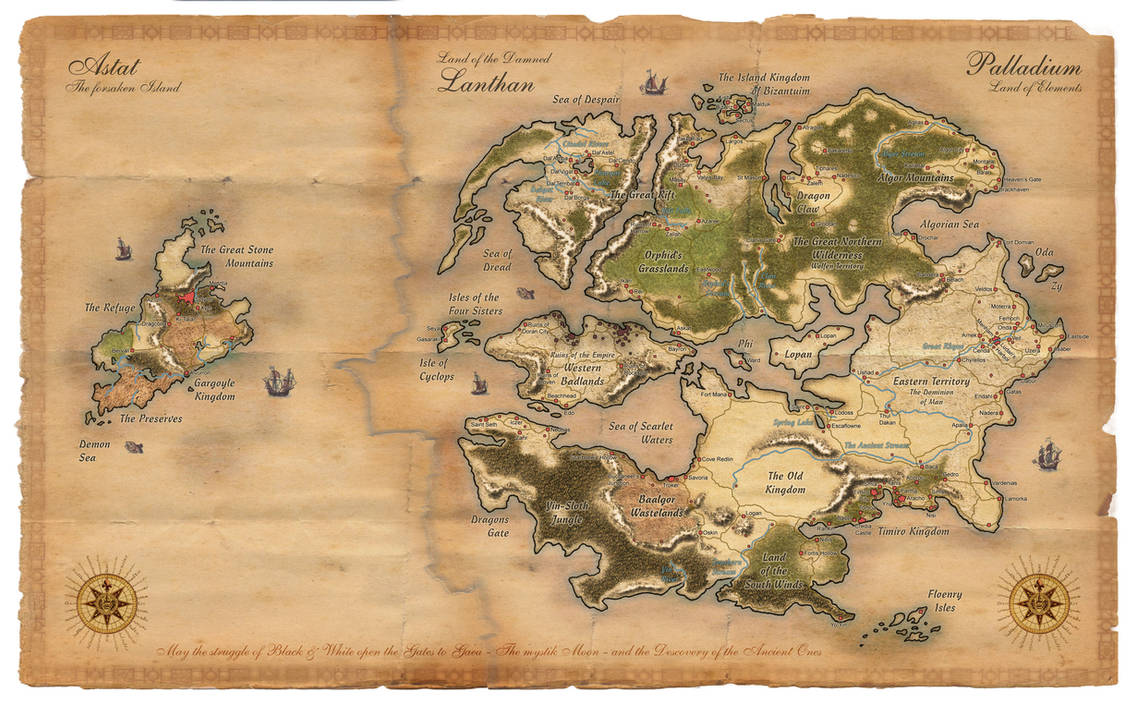
Image Source: https://www.deviantart.com/dawn2069ms/art/Palladium-Fantasy-Worldmap-61746603

The map of the world. A staple in fantasy games. The map may be something that the players know well, especially for well published settings, or it may be something only the GM knows. Both cases have their pros and cons. 

If the players know the map it makes placing them geographically easier for the GM during each session. They can look at the map, decide where they next want to go, and then clearly and concisely tell the GM that. The players know where they are and where they are going, and the GM doesn't need to contend with player aimlessness or confusion. 

The map can also present a way for the players to self direct. Maybe they see the name and icon of a strange ruin marked on the map and want to find out more. Such self direction is difficult when the map is unknown to the players and/or the characters. Which in turn puts the onus on the GM to drive the game from location to location and provide things for the player to do, at least early on. 

The flip side however isn't all bad. Sometimes the players will see that lack of a bigger picture of the world as an incentive to go out and explore. The lure of the unknown is a powerful one, and the joy of a hex crawl or similar style of exploration focused game can be significant. In such cases it also bonds the characters by making them have a common point of reference for the world. They may be all from the same village, or they find themselves all new residents of a demiplane of a well known vampire named ... Brad? Regardless of their other commonalities and differences they are all aware of only a limited portion of the world they inhabit. 

In such a case the GM should provide some teases to entice exploration. A range of dark hills to the east with a broken tower rising above the treetops. A sea to the south that the local fishermen say hides a place of great power. A well paved (in strange exotic materials ideally) that leads northward toward a rumored city of some other exotic or strange building material. These visual or verbal clues can set the players & their characters to put one foot in front of the other. 

A valid third option of course is to have the characters get lost. Maybe the game is set in a familiar setting but due to circumstances the players find themselves in a portion of the word that is less inhabited and more wild. They are lost (barring some very clever use of skills to narrow things down), and must explore the local world until they can find a place to allow them to orient themselves, a city or town of sufficient size that one or more of them have heard of it and know at least approximately where it is. 

At the beginning of the day, the GM needs to decide how to present the world to their players, and how important exploration will be for their game. The map, or lack thereof, can help to drive certain behaviors and open up certain options for both players and GMs alike. And at the end of that same day making some informed choices up front can help the GM to avoid the game progressing (or not progressing) in ways that they didn't intend. 

Wednesday, October 9, 2019

Nuts & Bolts #161 - Gotta Get Away


So, last week over on his blog Andrew posited some ideas for GMs looking into introduce a big bad and enable their escape from the players. (you'll want to read that on first, go on, I'll wait). We've been having sort of semi-related back and forth but I'm going to do a direct rebuttal this time as I think some of Andrew's ideas are great but I don't agree with others. 

To set some ground rules:
  • This is all opinion, and so neither of us is implicitly "right" for all GMs & player groups...
  • ...also for all game systems.
  • The entire point of both this post and Andrew's is setting up the villain to escape, not final showdowns, not how to run those villains the rest of the time, just villainous escapes.
  • Quotes from Andrew's blog in italics.
OK let's rock and roll...

Scene
The players have finally made their way into the Throne Room\Lair\Laboratory\Warren of a Big Baddy. On the Baddies home turf, the heroes are in for a fight.
So Andrew posits the scene as the villain's lair, and that's totally appropriate, but so too are situations in the world at large. The villain should be just as able to flee the burning of a village or the arcane destruction of a city (scale as appropriate to the villain). Why is this relevant? Because I think the first intro to the villain should be in the world and not in their lair most times. If you introduce them as "just another bad guy" their eventual escape and return can build up their rep with the party directly rather than building the hype indirectly leading up to the first meeting. This is probably just a style thing, but it bears mentioning.

Mood
The mood of these fights should always be a little tense, for you and the players.  For you never want to create an encounter like this that is a pushover for the players, nor should you want a TPK.
I pretty much agree wholeheartedly here when the players already know the bad guy is he villain. When they don't yet know that however, you can easily mood shift into either horror or terror if the villain is more powerful than the PCs. Consider a powerful necromancer who is slaughtering a town and using the corpses and souls to build a) an undead army, 2) a grotesque abomination of flesh, 3) a portal to realms beyond. At this stage the villain is so powerful that he can brush off the PCs as an annoyance, and his "escape" is instead played out after he completes his task and has no further need to stay. The PCs now have a long term goal to find a way to defeat this evil!

Alternately you could pose the scene heroic for the PCs and run the villain's escape as a victory for the players instead of a soft loss. The PCs drive off the warlord and his marauders saving the village, but now he has a score to settle with them later! This flips the script a bit and let's the next encounter be at the villain's impetus.

Regardless of how you parse the scene you do need to be prepared for the dice to turn things away from your intent. I suggest running things outside of strict "combat mechanics" if possible to allow you more leeway to set the long term story but still take account for player actions and avoid laying down rails. 

Threats
The Big Bad is a threat, but for the first meeting, they should not be fighting alone.
One word: Dragon. Sure a warlord should have an army, and a mage will likely have summons of some flavor, but what about something so beyond the player's current capabilities that it needs no help. A dragon would not stoop to having minions, it can raze a town and carry off the virgins by itself thanks very much. Granted lieutenants and flunkies can certainly give the players opportunities to get their fight on while the big bad gets away, but that doesn't work for every villain. Sometimes a single creature can, with multiple attacks and/or area effect powers, present not just a challenge but an overwhelming threat all on their own. 

Summons & minions can make great diversions however, as can unleashed beasts/monsters. But so too can out of control fires, frozen or buried townsfolk, and other non-monster/NPC threats. Such cases give you a great chance to leverage player alignment, reputation, motivation, and the like to drive the characters to let the villain escape while they rescue innocents, or prevent the destruction of a sacred site, important artifact, or similar. Also consider than spells like Banishment can work against the players and flip the script on "escapes."

Mechanics
If the Big Bad has their own way instantly get away, via magic item or special ability, make sure the players know about it beforehand. 
I actually don't agree here. Especially if your intent is to allow the villain to escape. The reveal of this power should be a major pain point for the characters, and should drive them to find a way to shut it down prior to their next encounter. This drives engagement and drives story progression. If the players are mad about the villain teleporting away they will have the characters drive the story to find a solution for said boss ability. This is a good thing in my mind.
Other than Special Powers or Items, make sure the description of the room describes the ways of egress from the room.
This I agree with. Describe your scene well. This engages the players, and obvious things like teleport circles, summoning circles, arcane doorways, astral rifts, ad nauseam are all things the players should know about. The ability to cast Teleport, or having a Wand of Plane shift, are both things that the players probably will only know about after one or more encounters with the boss, so depending on the characters' history with the villain you may need to keep some of this hidden. Let me repeat that: You are not beholden to telling the characters about all the big bad's abilities!

Tips
I’ve thrown in tips throughout this whole article, but the biggest tip I can give is don’t force the escape. Players are crafty and they may have come up with a plan that nullifies the big bad’s escape plan, or the rolls swing the wrong way and they have the big bad dead to rights. Let it happen. Lose the Big Bad. 
I agree with this entirely. No plan survives contact with the players. An anti-magic artifact, a counterspell, or clever application of any number of crazy player ideas can foil the mechanism by which you had planned for the villain to escape. I agree with Andrew and suggest you let it happen. The key then is to have a backup plan. Consider the following:

  • The warlord's cavalry are prevented from whisking him away or the party's warrior get's a timely critical hit. Suddenly the conquering villain is dead at the feet of the PCs and it looks like the marauding horde will be leaderless.
    • Instead of simply dissolving into disparate tribes or smaller forces, the loss of leadership unleashes the army to their own devices and the PCs now have to deal with numerous lesser threats. They simply will not be able to stop all of them before something precious is lost, a key locale, an important NPC, or a vital resource. The next steps of the campaign involve putting down these lesser threats and then recovering from the losses they were unable to stop.
    • The warlord had a general who was not part of his race or ethnic group, but was a military genius. It was this general who developed the strategies behind the warlord's actions. They now seize control of the army and change tactics entirely. The players still have a large force to deal with but now with entirely new and innovative tactics.
  • The necromancer is defeated. But the death of such a powerful practitioner of the dark arts releases a cascade of magics that result in unintended and unforeseen consequences.
    • Older evils that rest in the world wake and position themselves within the power vacuum left by the necromancer. This could be a similar foe such as a vampire, lich, or the like, or an evil creature of magic like a dragon or demon.
    • The undead army the necromancer controlled do not fall to the ground inactive with the death of the necromancer. Instead they gain the power to be self animated and some even gain a hint of intellect. Now a scourge of undead wash over the land under no control, or new control, and the characters have to deal with it.
Closing Thoughts
Do plan devious ways for enemies to escape, especially those you have hopes of becoming on-going foils for the PCs. Do allow the PCs to find out ways to foil the enemy powers they know about, but also do give the villains nasty new tricks. Don't shy away from the "untimely" death of the villain; the PCs earned it, and you CAN come up with better stories afterward. Do have backup plans for when the villain bites it.

Also have fun, maybe the villain was actually a tiny alien in a robot, or a demon that possesses bodies who can survive being slain, just remember to drop hints so the return of a dead antagonist isn't just you being crappy. 

Wednesday, September 25, 2019

Nuts & Bolts #160 - Board of RPGs #2 Firefly: The Game


So you and your group aim to misbehave. Maybe you have one of the official RPGs, or maybe you want to use something like Stars Without Number, Cypher System, DCC Star Crawl, or FFG's Star Wars/Genysis system. Regardless you have you choice of rules lined up, you have players making characters, but as GM you have SO. MUCH. WORK.

Unless you happen to also have a copy of Firefly: The Game from Gale Force Nine. No they didn't sponsor this (I actually don't find the board game very playable myself), but I cannot dismiss the utility of this game as a GM's resource. Let's begin shall we?


The 'Verse

So there's that big ol' board. The above actually includes the space added by the two big-box expansions, but still you get the drift. Why is this board great? Well firstly it's actually usable. You can lay it on the table and use it during play, everything is nicely legible, and the spaces laid out for the board game work great for semi-abstract RPG travel & navigation. You can use the spaces as a way to gauge distance and time to travel between locations. Each space can represent perhaps a day of travel, with the option to go "full burn" to allow the group to move faster but spend more fuel and run greater risk of running into unintended trouble.


Traveling The Black

Speaking of traveling, not only are those spaces a nice way to give your players an idea of the time and space required to get from point A to point B, but when you also use the two decks provided in the game (for Alliance Space and Border Space) you can roll cards from the appropriate decks and get ideas for random encounters and events. Consider that these decks contain a lot of "big black" cards (25) indicating no encounter, but a smaller number of cards (15) that yield run ins with Alliance Patrols, Reavers, dead ships, or various problems with your own ship (It's busted cap'n!) and you can see how a GM would be able to draw a card or cards and quickly determine if anything should happen and get some ideas of what.

The cards where something happens also work pretty well to give you some shorthand guidance. Take the "Scrapper Ambush" card, it has two ways to pass it, one requiring a mechanics test, the other requiring a combat test. While the players may think of another way out entirely you can use these as guidance to craft the details of the event. For example, the mechanics test may indicate that the players' ship is either physically held in place, or had been disabled (engine damage perhaps?), if the players are unable to fix the ship they will have to face a boarding party of scrapper and the combat that will almost certainly happen thereafter...


Jobs and Trouble

Speaking of stuff to do... a GMs biggest job in a game like this will be coming up with jobs for the PC crew to take on for pay. Luckily there's not just one deck of jobs, but five! Better still each is attached to an in-universe NPC like Badger or Niska or Patience. Some of these jobs will be totally legal. Others decidedly less so. The job cards contain all the info a GM could want; how much does it pay, is it legal or not, where the job starts (e.g. where you pick up goods, or execute a theft) and where the job ends (often another planet thus forcing travel across the 'verse), and any prerequisites for the job, such a a requirement of firepower, mechanical aptitude, or good speechifying. Illegal jobs often also include a number of cards to draw from the "Aim to Misbehave" deck which adds trouble and complications to the job. A GM can easily take this and create a RPG scenario on the fly. And speaking of that "Aim to Misbehave" deck, it's a wonderful resource for injecting a little trouble into the character's lives and make things interesting even when they are not on the job. Each card has a name and three ways to get past the card with two being tests of some kind that can be used to determine skill challenges in your system of choice, and the third an automatic pass if you have the right equipment or NPC ally.


Gear and NPCs

But wait, there's more! Because this little board game has a LOT of cards you also get a deck for every major planet that contains a slew of ready-made(ish) NPCs and gear including both personal equipment as well as ways to upgrade your ship. NPCs come with a name (usually, sometimes it's more of a title), a cost to hire, a couple of skills, and sometimes a unique ability. Fleshing these out into full NPCs may be more work in some systems than others, but I could easily use that card and a choice of level and require no further effort for a Cypher System game. Let's consider that Gun Hand above. He's a mercenary, with a cost of $100, so I could set his level at 1, since he is good with guns I could give him a level 2 for combat tasks, but he's also Expendable, so he gains an ability to be sacrificed to any GM intrusion or similar even if said Intrusion targets a different character.

Likewise equipment and ship upgrades have their cost and their effects in simple terms. Depending on your system of choice this may require more or less effort to flesh out. Again, were I using Cypher for this I could do very easily by converting skill bonuses into either assets or other similar effects. That "A Very Fine Hat" counts as "Fancy Duds" and also makes you a little better at social tests (1 asset), plus it'll open up more options for work when the times come for a new job. Another example (not shown) is "Vera." "Vera" is a sniper rifle (heavy weapon type) with +2 on Firearms and +1 on Speech; easy enough to say that it provides 2 assets on shooting attacks due to its accuracy, and an asset on intimidation checks because its "Vera". Alternately I could say it does +2 damage over a normal heavy weapon, but that doesn't jive with the sniper rifle trait in my mind.

Then there's ship upgrades like that Cry Baby. Cry Baby has a very discrete effect, it let's you escape Alliance Patrols (might also work for Reavers, but maybe not, they are crazy), but you lose it in the process. Still if your hold is full of contraband and your crew has a warrant or three on their heads it may well be worth it to escape Scott-free.

Closing

So, hopefully by now you're seeing the potential here. I used to think "gosh, a Firefly game would be so hard to manage" but really it's as simple as a moderately complicated board game. Who knew? Hopefully you do now, and maybe you'll find yourself out in the 'verse the next time the urge hits you.

Tuesday, September 17, 2019

DCC Spell: Nuphon's Staff Infection


Stephen Newton made a joke about "Staph Infection" to which I replied (jokingly) about creating a spell called "Staff Infection" for DCC. However joke soon gave birth to reality so, please enjoy the punny fruits of a Twitter interaction...


Nuphon's Staff Infection

Level: 3
Range: 10'/CL
Duration: Permanent and/or Varies
Casting Time: 1 round
Save: Mundane staves get no save. Magical staves receive a save using the owner's Fortitude vs the Spell Check.

Description: 
The vile arch-wizard Nuphon crafted this spell specifically to destroy the elaborately crafted staves of a rival. When cast on a staff (magical or mundane) the spell will infect the staff and cause rot, mutation, and decay. Especially potent castings of this spell may also affect the owner of the target staff. If no staff is present the wizard may cast this spell on a tree within range at a penalty of -1d.

Manifestation: Roll 1d4:
  1. The caster coughs violently before expelling a disgusting blob of sputum that infects the target staff.
  2. The caster gestures forth with their hand and a gelatinous blast of sickly yellow-green energy strikes the target staff.
  3. The caster vomits forth a magically animated bile that flows over the target staff.
  4. The caster belches forth a noxious cloud of infectious gasses that travel to and surround the target staff. 
Corruption: Roll 1d4:
  1. The skin on the caster's hands splits open and falls away revealing rough wooden bark like skin.
  2. The caster's touch become inimical to wood and wooden items. Their very touch deals 1d3 damage per round to wood. This effect penetrates clothing and boots.
  3. The caster doubles over and begins to cough for 1 full round during which they expel 1d3 pounds of rotten wood chips, and suffer 1 point of Stamina damage per pound.
  4. The becomes highly allergic to tree pollen and suffer a -1d penalty to all actions while out of doors during the spring season. 
Misfire: Roll 1d4:
  1. The caster takes a point of Stamina damage and becomes riddled with disease and cancerous growths. Each day the caster must make a DC 15 Fortitude save or lose another point of Stamina. The disease rages until the caster is dead or succeeds on their save for 5 straight days. 
  2. The caster's own staff (or similar hand held item) cracks in half and is destroyed.
  3. The ground nearby caves in as a swarm of termites rushes forth and onto the caster inflicting a penalty of -1d on all action dice for 1d5 rounds.
  4. A nearby tree becomes diseased and begins to emit foul odors and drip caustic pus. Within 1 round its rotting trunk collapsed and the tree crashes onto the caster (or an ally within range) dealing 1d12 damage.
Results:
  • 1: Lost! Failure! WORSE! Roll 1d6 modified by Luck: (0 or less) corruption + patron taint + misfire; (1-2) corruption; (3) patron taint (or corruption if no patron); (4+) misfire.
  • 2-11: Lost. Failure.
  • 12-15: Failure, but spell is not lost.
  • 16-17: The caster targets a single staff within range. The staff becomes twisted and gnarled gaining 1d6 ugly cancerous growths. For each growth the fumble range of the staff when used in melee combat is increased by 1. On any fumble the staff breaks irreparably in addition to any other fumble effect. 
  • 18-21: The caster targets a single staff within range. The staff becomes thorny and rough as it splits and twists. The wielder of the staff suffers 1d10+CL damage as splinters and thorns tear through their flesh.  
  • 22-23: The caster targets a single staff within range. The staff becomes twisted and gnarled and gains 1d3+CL weeping sores. The holder must make an immediate Fortitude save against a DC of 10+ the number of sores or suffer stamina damage equal to the number of sores. 
  • 24-26: The caster targets a single staff within range. The staff becomes twisted and gnarled and gaining 1d6+CL corrupted growths that twist magical energy. These growths disappear at a rate of 1 per day. Additionally, the user suffers a penalty on all spell checks equal to the number of growths. On any spell misfire the staff explodes dealing damage equal to the number of growths remaining in addition to normal misfire effects. 
  • 32-33: The caster targets a single staff within range sundering it into kindling. Anybody within 5xCL feet of the staff takes 3d8+CL damage from flying splinters (Reflex save for half). 
  • 27-31: The caster targets a single staff within range which explodes in a fiery conflagration! Anybody within 5xCL feet of the staff takes 5d6+CL damage from burning cinders (Reflex save for half). 
  • 34-35: The caster targets a single staff within range which grows boils and festering wounds for 1 round before bursting in a shower of pus, ooze, and gore. Anybody within 5xCL feet of the staff takes 3d10+CL damage from diseased mucus (Reflex save for half) and must make a DC 15 Fortitude save against disease or lose 1d4 Stamina as boils and pustules break out on their skin.
  • 36+: The caster targets a single staff within range which instantly explodes in a shower of festering shards. Anybody within 5xCL feet of the staff takes 4d10+CL damage from diseased mucus (Reflex save for half) and must make a DC 20 Fortitude save against disease or lose 2d4 Stamina as boils and pustules break out on their skin.

Wednesday, September 11, 2019

Nuts & Bolts #159 - Board of RPGs #1 Gloomhaven


Four years ago I wrote a blog post about harvesting the boards from your board games for use with your RPGs (find it here; TLDR: you probably already have a closet full of RPG ready maps). Board gaming is a big part of my hobby time as I have gotten older. It's easy to do a board game regardless of who can show up, but RPG sessions often require all players be present (especially when your group is small, as mine is). We play a lot of games from the super lite, 20 minute games, to heavier games like Terraforming Mars, Orleans, Firefly: The Game, and probably the heaviest game that makes frequent rotation: Gloomhaven.

Thing is that while some of these are very "board gamey" others like Gloomhaven, and Firefly have very RPG-like choices to be made and mechanics that would not be otherwise out of place in an RPG. Do you sell the mercenary a healing potion as he asked, or choose not to and risk his ire? Do you take on a job ferrying slaves and risk pissing off your crew during the trip to the next system? These are very RPG-like choices. Playing these games has got me thinking about how board games have clearly been inspired by RPGs and how RPGs can be inspired right back by board games.

All of that said, let's talk about Gloomhaven, the very much an "RPG in a box" board game, that manages to evoke a lot of RPG like decision making and interactions despite its utter lack of a GM to tailor things to the group.

Goals

So, first of all, let's talk goals. When you make a character in Gloomhaven you get two cards of the goals deck and choose one. These cards give you a bit of character background and set up what your character's personal goal is as well as the reward for meeting that goal. The character who meets that goal will thereafter retire. These can be a simple as "defeat X number of [monster type]" or "complete X number of encounters while [condition]". In addition to these, each character will also get a short term goal for each encounter/mission. Things like "end with your maximum health," "only take short rests," or "don't use any equipment." These short term goals act as a way to, essentially, gain experience to unlock perks (Gloomhaven actually has two independent advancement tracks, but more on that later).

At first glance these may seem like board gamey ways to "gamify" the process of unlocking additional content from the box (which it is) and/or improving your character, but surprisingly a lot of role play happens around these goals. When a character is one kill from their goal and that enemy is downed by another character in search of their own goals the talk at the table gets pretty interesting (I needed to hit my short term goal dang it!).

There's value here, especially in a hobby that often loses itself in the theoretical "endlessness" of the game. Yes, you the player may want to keep adventuring, but would that character actually keep going after everything they've been through? I know my decision to retire a character at only level 3 in a Dungeon Crawl Classics game struck some of the other players as odd, but he had modest wealth and was the newly elected mayor of the town, adventuring didn't feel like a choice the character would make. Better still that choice resulted in the character becoming the "god emperor" so I think it was a good one.

A Rolling Roster

Retirement of characters does mean that your cast changes. Rather than looking at that as an bad thing, consider the opportunity that this presents. With the removal of a given character and the introduction of a new character the roles and skill sets that that character filled will likely change. This opens up an opportunity for existing characters to explore aspects of their character outside of their existing niche. This means that a character may be able to step up into the role of tank, or healer, or utility character. It's also possible that the entire party dynamic may change. If your wizard retires and the player brings in a rogue as their next character the way the party approaches combat and exploration is not only likely to change, but is likely to NEED to change.

Certain RPGs really make it hard for a character to die and therefore make it easy to keep playing the same character. Worse, I have seen a lot of "I only play X" and "this is a version of my old character [name]". While I can understand that there is comfort in the familiar I also think a lot of folks are missing out on trying new things. A rolling roster can help motivate the players to try new things; after all, if it doesn't work out that character can just be retired.

Building a Home: Prosperity, Reputation & Influence

OK, fair to say that I didn't learn this from Gloomhaven specifically, but Gloomhaven does do a very good job of this, and has driven a lot of RPG-like talk at the table. So Gloomhaven has a track for how prosperous the city is, another for the reputation of the player party (which can fall below zero because the game knows that people can be a-holes), and all of this had an impact on play as both the player party wields influence and the city wields influence on various encounters. The most obvious way this is felt is that Prosperity influences the starting level of new characters. A fantastic connection that can be directly ported into your RPG if character death is a thing (see above). RPG Judges/GMs could easily just say "you come in at the lowest level in the part minus 1" or similar, but by tying it to how well the city at the center of the campaign is doing you are telling the players that they can affect their own future characters by ensuring the city does well.

Equally as impactful (though we often forget about this) is that reputation influences item pricing. As the player group gains reputation they can buy items more cheaply (or presumably at greater cost if their rep is in the toilet). This hits the players in their characters' wallets, and that can be shockingly effective. Again, the players' characters' actions can have direct feedback on the way the world reacts to them. This is lost on murderhobo style games, which can be a real shame because it robs the players of the repercussions of their own behavior through the characters.

Similarly some of the random encounters that can take place within the city or on the road can be influenced by these values. A merchant may pay more after getting help if the character's have a high reputation, or a NPC group may react differently if Gloomhaven's prosperity is above or below a certain threshold. Consider how the wealth of a town impacts the way that raiders, merchants, and neighboring towns view it. A poor tow is less likely to see raiders and merchants will visit less often, while neighboring towns may look to annex land, and steal capable citizens.

And more ...

I could probably go on for quite a bit about how the structure of Gloomhaven's quests and random encounters mimic the best aspects of a hex crawl, about how the random encounters are really well designed despite being a simple two choice system, or how the game is smart enough to lock side quests away behind gating accomplishments (we really want to find a way to breathe under water so we can do a side quest we learned of a long time ago), but I think that can maybe be another blog for another time. In the meantime maybe take a look at your own board games (RPG-like or otherwise) and see what you can take away from them for the purposes of your RPG sessions, and let me know if there's anything cool out there I should know about or look into.