Wednesday, May 2, 2018

The Alphabet of Outer Beings - T is also for Temples


Just as towers are the archetypal homes and workplaces of wizards, so to are Temples the typical residence and powerbase for Clerics. When it comes to Outer Beings a Deity is far more likely to influence the design, construction, and content of a temple than a Patron is for a wizard's tower. Temples come in many shapes and sizes, all influenced by the population of faithful in the area and the dictates of the deity to whom they are erected to honor. The following tables can help fill in the blanks if you need a temple on the fly, or if you are planning a location ahead of time.

Table Tem1: Location of Temple (roll 1d8 (if needed))
  1. The temple is located in a village of less than 100 people. 
  2. The temple is located in a small hamlet of 100-500 people.
  3. The temple is located in a moderately sized town of 500-1000 people.
  4. The temple is located in a city of greater than 1000 people. 
  5. The temple is located within a castle or other fortification.
  6. The temple is located within a dungeon, cave, or mine.
  7. The temple is located on an remote island.
  8. The temple is located deep within an unexplored forrest.
Table Tem2: Protection (roll 1d6)
  1. The temple is unprotected beyond the capabilities of the priests and any local faithful.
  2. Guards - The temple has guards, often in the form of janissaries, paladins, or zealots.
  3. Undead - The  temple is protected by some form of undead. For the temples of chaotic gods these are often scores of zombies or animate skeletons. The temples of lawful gods are guarded by the spirits of the faithful, often fallen members of a martial priesthood. 
  4. Divine Warding - Divine wards and blessings prevent unwanted visitors from entering the area until they are destroyed. 
  5. The location of the temple is hidden behind traps that are designed to be tests of faith for those who seek entrance. 
  6. Champions - The temple is protected by champions who are aligned to the deities goals. These are usually powerful supernatural creatures like Sphinxes, Dragons, and the like. 
Table Tem3: Notable magical features (roll 1d6)
  1. The temple is home to a genuine relic of the deity. (see R is for Relics
  2. Only divine magic will work within the temple.
  3. The temple has been blessed and is truly a holy place. Divine magic is easier to cast and more effective within the temple and its grounds.
  4. The temple is no longer sacred ground. For some reason the temple has lost the favor of the deity and it is harder to channel their magic and such magic is less powerful. 
  5. The temple's fate is closely watched by the deity. If it is threatened beyond what its protectors can rebuff the deity is willing to send an Avatar to aid the defenders.
  6. A well spring is located on the temple grounds, 75% chance of being within the temple itself. For lawful gods this acts as a healing spring restoring those who drink from it. For neutral gods the waters of the spring have anti-magic properties and can remove curses and other magical effects. For chaotic gods the spring's waters have effects that vary seemingly at will and can encompass any magical effect (Judge's discretion); the temple priests likely have ways of determining the current chaotic effect (60% chance). 
Table Tem4: Notable mundane features (roll 1d8)
  1. The temple houses a notably sized library of religious texts.
  2. The temple was built over a natural gas vent that feeds an eternal flame.
  3. The temple has a large catacomb beneath where many non-sainted individuals are buried. 
  4. The temple has an exceptionally tall tower, or overall large construction, marking it as the tallest/largest structure in the region.
  5. The temple is quite modest from the outside, but the inside is heavily embellished in precious metals, leaded/tinted glass, and fine sculpture.
  6. The temple is staffed only by a single sex of clerics, monks/nuns, etc.
  7. The temple is located adjacent to farms and the monks produce a highly sought food item (beer, cider, jams, hams, etc.)
  8. The temple is not fully enclosed, designed as an open air space. 50% chance of having a roof supported by columns, otherwise entirely open to the elements. 
Table Tem5: Weird Stuff (roll 1d6)
  1. The temple was once a temple to another deity, 80% chance that significant architectural features remain. 
  2. The temple is built atop a high bluff such that the ascent is a labor of thousands of steps, or a climb up rope ladders, or rock wall. 
  3. The temple appears to be in a constant state of expansion/construction.
  4. The temple is in ruins but services are still held.
  5. The locals avoid the temple and refuse to even acknowledge it to outsiders. 
  6. The surrounding countryside and town have been carefully constructed such that the temple resides in the exact center of the area and that surrounding places of note lay out the deity's holy symbol if viewed from above. 

Wednesday, April 25, 2018

The Alphabet of Outer Beings - T is for Towers

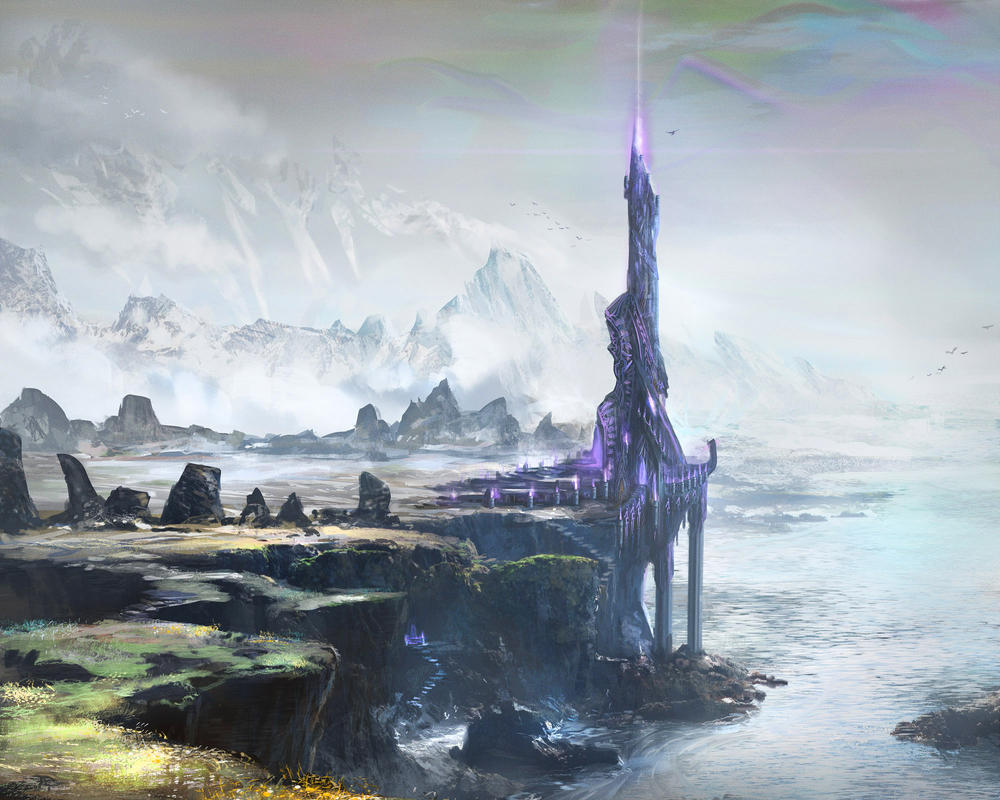
Image Source: https://www.deviantart.com/art/Dominion-tower-741776408

Towers are the traditional, some may say stereotypical, workshops and living quarters of wizards. The actual residence or domain of a supernatural patron is well outside the scope of a simple generator, and should probably be a planar realm or entire empire or kingdom of itself. However, the wizards who pledge their service to such Outer Beings likely design their own residences in accordance to the wishes and preferences of their patrons. Alternately you can just use this to whip up a random wizard tower your PCs stumble on during some hexploration.

Table T1: Type of Tower (roll 2d6)
  1. How did you roll a 1 on 2d6? You're doing it wrong!
  2. Mountaintop - The wizard takes up residence atop a mountain, either in a cave or a simple hut of 1d3 rooms.
  3. Just a cave - The wizard makes their residence not in a tower, or even some other structure, but a cave, carved from the heart-rock of the world.
  4. A simple house - Not a tower at all but a simple house, one or two floors, wood and stone construction.
  5. Wooden tower - A traditional tower constructed from wood and other materials.
  6. Stone Masonry Tower - A classic tower of stone blocks, built to spec. or taken over later.
  7. Carved from Monolithic Stone - A freestanding tower carved from a single slab of monolithic rock. This may stand out in the landscape, or be one of many such monoliths.
  8. Tree house - A residence built within a living tree, 50%  chance of being entirely woven of the tree itself, otherwise constructed within the tree's branches from other materials.
  9. Castle Tower - The wizard has an earthly patron who provides them with a tower within their castle. 
  10. Cave behind a waterfall - Hidden behind a waterfall is a cave that has been made into a wizardly retreat. 
  11. Submerged - The tower is actually built into a body of water and only the entrance is visible above the waves. Most likely stone construction.
  12. A pocket dimension - The wizardly residence is actually in a pocket dimension accessible only via a trigger of some kind if a fixed location such as the top of a normal tower, or a natural location.
Table T2: Protection (roll 1d8)
  1. Guards - The wizard employs some kind of living guards to protect their dwelling.
  2. Magical turrets - The wizard's dwelling is protected by active magical defenses in the form of spell turrets that cast attacks spells like magic missile, fireball, and the like.
  3. Golems - The wizard has 1d3 golems patrolling the area to keep out unwanted visitors. 
  4. Wards - Magical wards prevent unwanted visitors from entering the area until the wards are destroyed. 
  5. The location of the "tower" is hidden by magical illusions that hide the dwelling entirely. 
  6. Magical plants and vines grasp any trespasser, holding them in place until the owner can deal with them.
  7. The "tower" is incredibly small and can only be accessed by people using magic to shrink themselves down to size.
  8. The tower is protected by spatial warps that make the distance to the tower much greater that it seems. 
Table T3: Weird Stuff (roll 1d6)
  1. The location of the tower is only accessible during at night.
  2. The tower can only be approached from a specific cardinal direction. 
  3. Time passes within the "tower" much faster, or slower, than normal. 
  4. The location and surrounding area are always affected by the same kind of weather. 50% chance of being inhospitable (rain/snow/fog), otherwise always fair. 
  5. The residence exists within an anti-magic pocket or zone that actually prevents any kind of magic from functioning. 
  6. The location of the tower is only accessible during daytime.
Table T4: Notable mundane features (roll 1d8)
  1. The structure is in the shape of the patron's sigil. 
  2. The residence is vastly larger than needed for the volume of furniture and belongings within.
  3. The materials of the residence are especially rare and valuable. Worked masonry may be of all cut jade. Lumber comes from exceptionally rare trees. A cave dwelling in riddled with veins of precious metals or gems. 
  4. A small river or stream passes directly through the residence complete with a waterwheel to provide mechanical power/work.
  5. There is an orrery and an observatory atop the structure to allow detailed viewing of the stars.
  6. A cemetery abuts the residence. 
  7. A smithy abuts the residence.
  8. All the doors are pocket doors.
Table T5: Notable magical features (roll 1d6)
  1. There is a well appointed lab for the brewing of potions
  2. A large summoning circle has been permanently inscribed into the floor in pure gold. 
  3. A crystalline apparatus to aid in enchanting items is located on the grounds.
  4. A garden of exotic magical and mundane plants is well tended.
  5. A stable houses a small collection of strange beasts.
  6. The entire property can be piloted from within and moved via the following means:
    1. Great mechanical legs
    2. Magical flight
    3. Teleportation
    4. Non-magical flight via balloons and propellers.
    5. A series of clockwork ants that swarm under the building and carry it off.
    6. An aligned dragon who owes a favor to the owner.

Thursday, April 19, 2018

Thoughts on a DCC monk

Image Source: https://www.deviantart.com/art/Monk-17-06-12-340307189

The monks of the far east rarely venture from their secluded monasteries, but from time to time a young monk will be too consumed with curiosity about the world or wanderlust to stay within their quiet and contemplative confines. These monks venture out into the world with very little to their name, a handful of coppers gained by begging in a nearby village, a stout stave, and the clothing typical of their order. Most of these monks eventually make their way back to the monasteries, but a truly scant few, of those scant few, decide to stay in the world, and of those few a bare handful pass their knowledge, incomplete as it is, on to a small number of worthy students. These students may seek out the monasteries in time to properly complete their own training and to complete the journey of spirit their teacher began. Others will take the lessons of inner strength and martial prowess into the world as adventurers.

Hit Dice: d8

Attack Bonus & Mighty Deed of Arms: as warrior

Weapons and Armor: The monk is trained only in the use of staves and unarmed combat. Monks rarely wear any armor and never armor with a fumble die greater than 1d8.

Flurry of blows: When fighting unarmed the monk may treat their fists and feet as dual weapons using the two weapon fighting rules. At first level a monk is always considered to have a minimum Agility of 16 (unless it is naturally higher) when fighting with bare hands and feet, at fifth level this increases to a minimum Agility of 18. When attacking unarmed and using the two weapon fighting rules the monk's unarmed attacks do 1d3 damage.

Chi Healing
Through meditation and mindful manipulation their internal energies a monk is able to speed up the healing of their own body. Once per day per level the monk may spend 1 turn in meditation to focus on healing themselves. Treat this effect as Lay on Hands (DCC pg. 30), rolling 1d20+Per+level. The monk is treated as "adjacent" and failure does not trigger disapproval, but does consume the use of the ability upon failure.

Be Like Water
Monks eschew armor in favor of staying mobile and nimble. On their turn a monk may add the result of their deed die to their Armor Class, and to their speed. This is in addition to any other effects of their Mighty Deed.

~~~~~~~~~

Now my thoughts on the design side.

  1. Hit Dice - While Monks are a martial class I knew I wanted to give them a recovery power and stepping down twice from the Warrior's d12 felt appropriate since they can self heal outside of combat.
  2. Armor and Weapons - I decided to take a hard stance here and basically rule out almost all forms of both armor and weapons. Weapons is a stylistic approach as I wanted to have them make many attacks with less damage per attack (at 5th level they can make 4 attacks per round but are still limited to 1d3 damage + STR and Deed Die). This might end up a little too powerful, but I'm unsure without playtesting.
  3. Flurry of blows - I copped this flat out from halflings and then added the 5th level boon since the monk is limited to their unarmed 1d3 damage. Again, this might end up a little too powerful, but I'm unsure without playtesting.
  4. Chi Healing - My sole concession to "mystical monks." My hope is that the 1 turn requirement and the limited uses per day will keep this from making them too durable compared to a warrior. 
  5. Be Like Water - This was the idea that spurred me to do this. Rather than approach "the armor problem" with a flat AC bonus scaled to their level why not utilize the existing Deed Die mechanic. This also means that the monk will occasionally roll poorly and be caught flat footed or in an open stance. The bonus movement was my way to also spice things up and allow these unarmored warriors to really move around the battlefield when they wanted. 

Feedback and comments are welcome, so long as they are constructive.