Wednesday, May 16, 2018

The Alphabet of Outer Beings - A is for Avatar


A is for Avatar

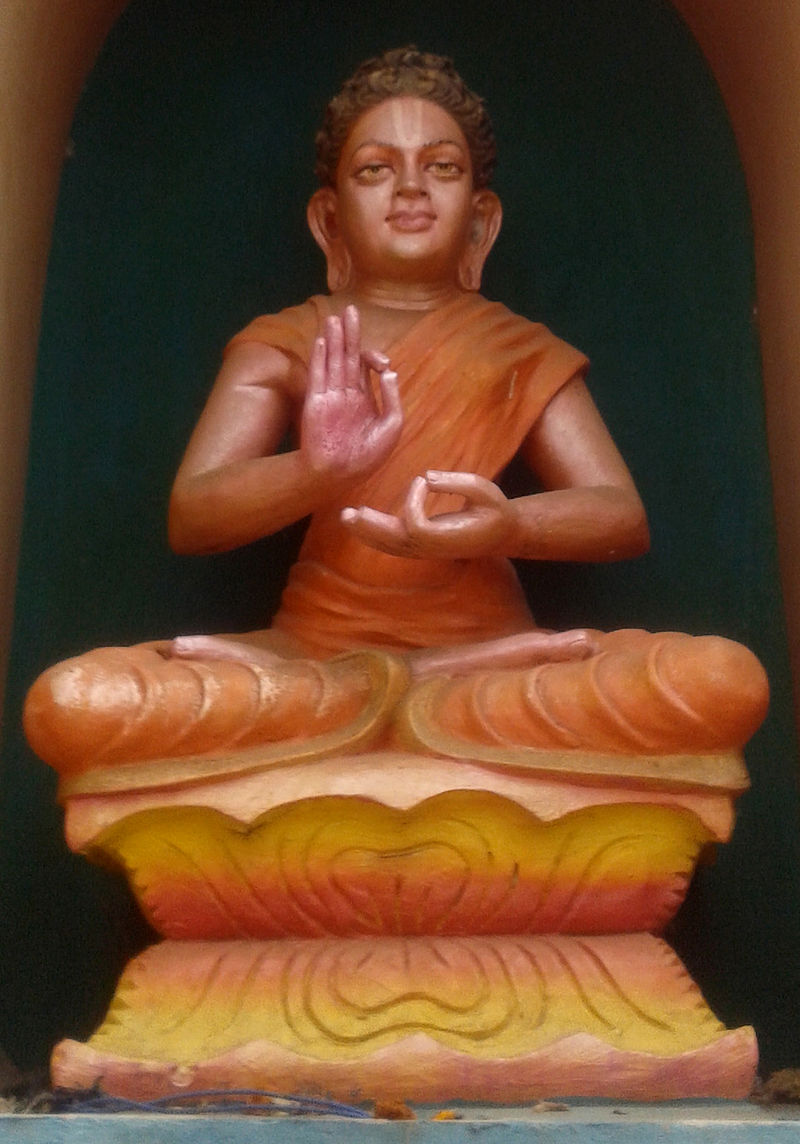
An avatar is a physical manifestation of a powerful outer being in the mortal plain. These representatives of gods or patrons often take the form of a mortal I the image of the outer being but this is not exclusive, it's possible for an avatar to be an animal, a column of fire, a burning bush, or even the animation of  an idol. An avatar may have all of the power of the outer being or merely be invested with a portion of it; likewise an avatar may be a direct conduit or an independent fraction of the outer being’s psyche.

Table A1: Avatar Manifestation (roll %)
  • 1-50% - the avatar takes the form of a mortal intelligent creature, proceed to table A2
  • 51-70% - the avatar takes the form of an animal, proceed to table A3
  • 71-80% - the avatar takes the form of a plant, proceed to table A4
  • 81-90% - the avatar is embodies embodied in an abstract show off power, proceed to table A5
  • 91-98% - the avatar inhabits and animates an idol of the outer being
  • 99-00% - roll again twice & combine, ignoring all results of 91% or greater.
Table A2: Mortal Races (roll 1d10 then proceed to Table A6)
If the outer being only has followers of a single race ignore this table, the avatar takes the form of that race.
  1. Human
  2. Dwarf
  3. Elf
  4. Halfling
  5. Orc
  6. Goblin
  7. Ogre
  8. Giant
  9. Gnome
  10. Half breed, roll again twice
Table A3: Animal Forms (roll 1d10 then proceed to Table A6)
  1. Canine/wolf
  2. Predatory bird
  3. Feline
  4. Fish
  5. Bird, non-predatory
  6. Ruminant
  7. Dragon
  8. Horse
  9. Serpent
  10. Mixed (roll again twice and combine)
Table A4: Plants Forms (roll 1d6 then proceed to Table A6)
  1. Tree, Evergreen
  2. Tree, Fruit bearing
  3. Tree, Deciduous
  4. Shrubbery
  5. Flowers
  6. A mass of vines, moss, and grasses
Table A5: Abstract displays of power (roll 1d6 then proceed to Table A6)
  1. A storm of lightning
  2. A pillar of flame
  3. A whirlwind
  4. A font of water
  5. A pillar of stone
  6. A beam of pure light
Table A6: Avatar Divine Powers (roll 1d6 then proceed to Table A7)
If the avatar is the creation of a supernatural patron replace clerical magic with wizardly magics.
  1. Divine Knowledge - though the avatar lacks any divine abilities it does possess knowledge
  2. Living Icon - The avatar is a living icon of their deity and may lay on hands and turn unholy as a cleric of level 1d10
  3. Minor clerical magic - The avatar is a weak cleric able to perform all the same divine magics as a cleric of level 1d3. 
  4. Clerical magic - The avatar is a cleric able to perform all the same divine magics as a cleric of level 2d4.
  5. Divine cleric - The avatar is able to fully channel the power of the deity and may perform any all clerical magic as a cleric of the normal maximum level. 
  6. Powers beyond mortal ken - The avatar is not only able to channel any and all clerical magics but also may perform divine miracles on behalf of the deity. 
Table A7: Avatar's Hit Dice (roll 1d6 then proceed to Table A8)
  1. Mortal - 2d6 hit dice
  2. Tough Mortal - 4d8 hit dice
  3. Powerful - 6d10 hit dice
  4. Incredible power - 8d12 hit dice
  5. Nigh Immortal - 15d10 hit dice
  6. Demigod - 20d10 hit dice
Table A8: Avatar's Purpose on the mortal plane  (roll 1d6)
  1. The avatar has been sent to deliver a prophecy.
  2. The avatar has been sent to protect a fated individual.
  3. The avatar has been sent to lead loyal forces in a war upon the deity's enemies.
  4. The avatar has been sent to fulfill a prophecy.
  5. The avatar has been sent to convert a specific person to the deity's worship.
  6. The avatar has been sent to kill an enemy of the deity. 

              Wednesday, May 9, 2018

              MCC Recap - The Purple Pit of the Mole Men


              A couple weeks ago, with a truncated crew I ran a somewhat off the cuff funnel for MCC with the players who were available. This was a modified and adapted version of Harley Stroh's The Sinister Secret of Whiterock. 
              • Craig McCullough as
                • Fred - Pure Strain Human
                • Ted - Pure Strain Human
                • Ed - Pure Strain Human
                • Jason - Pure Strain Human
              • Alex Perucchini as
                • Zooma - Mutant
                • Theo - Pure Strain Human
                • Bile - Vulture Manimal
                • Ophelia - Pure Strain Human
              • Andrew Lyon as
                • George - Chimpanzee Manimal
                • Phil - Pure Strain Human
                • Roger - Mutant
                • Betsy - Pure Strain Human
              • William Keller as
                • Tully - Mutant
                • Daisy - Mutant
                • 17 - Pure Strain Human
                • Guh - Pure Strain Human

              Sent out to explore the jungles to the south of the village the PC group of mixed hunters and gatherers traveled for several days before reaching the boundary of the jungle and the foothills that rose into the Great Mountains to the south. After many days of travel the group was camped for the evening when poor unlucky Ed (I think it was Ed) was standing watch. He never saw his end coming. When morning came the group found Ed missing and apart from a trail into the wild and a foot no other sign of Ed was found.

              Following the trail the group came to a strange wall of ancient made stone where the trail abruptly ended. Searching around they found a large metal hatch that revealed a hole into a dark cave. Part of the group descended into the cave where they were set upon by screamers. The radioactive fungus driven skeletons attacked as mercilessly as they attacked mindlessly and a hard fought battle ensued during which George and 17 were killed.

              Once the screamers were killed the group explored the room, which was no cave but some kind of structure from long ago. They found a skull with a strange mechanical eye, but none were willing to attempt the operation to replace their own with it. Searching for a way out they located a secret door and were ambushed by a pair of mole-men. Though the mole men were well armored and well armed the group outnumbered them and quickly dispatched their foes and looted a wicked metal blade, some well made javelins, and two pieces of metal cloth armor too small for any in their party to wear.

              Proceeding down on exit from this chamber the group located a broken bridge across a deep chasm. Far below there was the sound of rushing water and a strange purple glow. After much discussion they found a way to lower a large chain down into the chasm and one by one they attempted the treacherous climb. Most of them by luck or skill, made it to a ledge far below, but Daisy and Fred slipped and plummeted to their doom.

              Faced with the choice to enter a large chamber full of refuse or climb a rope to the underground lake and investigate the source of the glow the party chose the latter and made their way to the shallows of the lake. Assaulting the beach they were attacked by another pair of armed mole men and a female of their species wearing a strange purple crown and weilding a death ray of the ancient ones! This death ray fired heat beams so intense that Guh exploded when hit by one, the juices in his body flashing to steam!

              Luck and numbers, and the aid of one of the dead (who hand landed on and killed one of the mole men when they fell from the chain) allowed the group to achieve victory. They looted the dead and what treasure remained before making a hasty escape as the very chamber seemed to be collapsing as a result of the death of the mole men's queen...

              In Memoriam: 
              • Daisy
              • 17
              • Guh
              • Fred
              • Ed
              • George

              Wednesday, May 2, 2018

              The Alphabet of Outer Beings - T is also for Temples


              Just as towers are the archetypal homes and workplaces of wizards, so to are Temples the typical residence and powerbase for Clerics. When it comes to Outer Beings a Deity is far more likely to influence the design, construction, and content of a temple than a Patron is for a wizard's tower. Temples come in many shapes and sizes, all influenced by the population of faithful in the area and the dictates of the deity to whom they are erected to honor. The following tables can help fill in the blanks if you need a temple on the fly, or if you are planning a location ahead of time.

              Table Tem1: Location of Temple (roll 1d8 (if needed))
              1. The temple is located in a village of less than 100 people. 
              2. The temple is located in a small hamlet of 100-500 people.
              3. The temple is located in a moderately sized town of 500-1000 people.
              4. The temple is located in a city of greater than 1000 people. 
              5. The temple is located within a castle or other fortification.
              6. The temple is located within a dungeon, cave, or mine.
              7. The temple is located on an remote island.
              8. The temple is located deep within an unexplored forrest.
              Table Tem2: Protection (roll 1d6)
              1. The temple is unprotected beyond the capabilities of the priests and any local faithful.
              2. Guards - The temple has guards, often in the form of janissaries, paladins, or zealots.
              3. Undead - The  temple is protected by some form of undead. For the temples of chaotic gods these are often scores of zombies or animate skeletons. The temples of lawful gods are guarded by the spirits of the faithful, often fallen members of a martial priesthood. 
              4. Divine Warding - Divine wards and blessings prevent unwanted visitors from entering the area until they are destroyed. 
              5. The location of the temple is hidden behind traps that are designed to be tests of faith for those who seek entrance. 
              6. Champions - The temple is protected by champions who are aligned to the deities goals. These are usually powerful supernatural creatures like Sphinxes, Dragons, and the like. 
              Table Tem3: Notable magical features (roll 1d6)
              1. The temple is home to a genuine relic of the deity. (see R is for Relics) 
              2. Only divine magic will work within the temple.
              3. The temple has been blessed and is truly a holy place. Divine magic is easier to cast and more effective within the temple and its grounds.
              4. The temple is no longer sacred ground. For some reason the temple has lost the favor of the deity and it is harder to channel their magic and such magic is less powerful. 
              5. The temple's fate is closely watched by the deity. If it is threatened beyond what its protectors can rebuff the deity is willing to send an Avatar to aid the defenders.
              6. A well spring is located on the temple grounds, 75% chance of being within the temple itself. For lawful gods this acts as a healing spring restoring those who drink from it. For neutral gods the waters of the spring have anti-magic properties and can remove curses and other magical effects. For chaotic gods the spring's waters have effects that vary seemingly at will and can encompass any magical effect (Judge's discretion); the temple priests likely have ways of determining the current chaotic effect (60% chance). 
              Table Tem4: Notable mundane features (roll 1d8)
              1. The temple houses a notably sized library of religious texts.
              2. The temple was built over a natural gas vent that feeds an eternal flame.
              3. The temple has a large catacomb beneath where many non-sainted individuals are buried. 
              4. The temple has an exceptionally tall tower, or overall large construction, marking it as the tallest/largest structure in the region.
              5. The temple is quite modest from the outside, but the inside is heavily embellished in precious metals, leaded/tinted glass, and fine sculpture.
              6. The temple is staffed only by a single sex of clerics, monks/nuns, etc.
              7. The temple is located adjacent to farms and the monks produce a highly sought food item (beer, cider, jams, hams, etc.)
              8. The temple is not fully enclosed, designed as an open air space. 50% chance of having a roof supported by columns, otherwise entirely open to the elements. 
              Table Tem5: Weird Stuff (roll 1d6)
              1. The temple was once a temple to another deity, 80% chance that significant architectural features remain. 
              2. The temple is built atop a high bluff such that the ascent is a labor of thousands of steps, or a climb up rope ladders, or rock wall. 
              3. The temple appears to be in a constant state of expansion/construction.
              4. The temple is in ruins but services are still held.
              5. The locals avoid the temple and refuse to even acknowledge it to outsiders. 
              6. The surrounding countryside and town have been carefully constructed such that the temple resides in the exact center of the area and that surrounding places of note lay out the deity's holy symbol if viewed from above.