Wednesday, April 4, 2018
MCC Downtime & Development
My MCC campaign has finally completed the first major adventure module and the heroes are returning home, many of them with a few fresh faces (read: level zeroes). The mains are all able to level to 2nd level and the surviving zeroes are mostly able to level to 1st. I know a lot of campaigns would gloss over this transition but for my money the biggest problem I have with level systems (rather than piecemeal advancement) is the level transitions, or lack of transitions. While I could also handwave a lot of this I feel that some simple mechanics will not be difficult to assemble and will help generate some verisimilitude. Codifying this time also ensures that there is a fair way to determine recovery of lost Luck and Glowburn without simply giving the player a "fill up" after each adventure, meaning that these mechanics cannot be abused without creating lasting difficulties.
Leveling
My thinking is that some training time is warranted when leveling. This is some simple time that takes things from the prior adventure/session, to the point where the players level. This is pretty key in MCC for Shamen, Manimals, Mutants, and Plantients, all of whom benefit from some amount of downtime to recover from glowburn (and burnt Luck for the Shamen). This also allows for the PSH classes to recover Luck (which should make them more willing to use it in play) and also recovery any temporary ability loss.
My plan is to roll 1d7+[Prior level] days to determine the training time. This is directly the amount of Glowburn recovery. Since Shamen recover Luck very slowly I'll round up any fraction of 1 week for their recovery. This may be generous, but considering how slowly they recover Luck compared to how often they will want to burn it I doubt it will be problematic. Simultaneously this will prevent abuse of Glowburn as the players may not recover all spent points before the next adventure.
Ability Updates
Since Shamen can try to re-forge their patron bonds (and gain new wetware and additional castings of Invoke Patron bond), and the various mutants can re-roll their permanent mutations each level this also allows the players to do so with some degree of understanding of their available resources. Again, Glowburn comes into play heavily here. A mutant may have burned down their stats earlier and the training time allows for some recovery prior to a fresh roll.
For mutants these rolls do not require time, but for Shamen there is a 1 week casting time (though the GM can waive this as they see fit). Much in the same way I intend to round up for Shamen luck recovery I will do the same for the (re)casting of Patron Bonds. Early on the Shaman class is dependant on the Patron bond so allowing them enough time to re-cast at least 1 of those bonds each level up seems reasonable.
Moving Onward
Once characters have trained and leveled they need to get to the next adventure, or have it come to them. I don't want to allow too much time here (again, I need to ensure I don't break the Glowburn rules,) but I also want to ensure that the passage of time is appropriate and characters don't end up feeling like they went from level 1 to level 10 in days or weeks. I plan to roll 1d3 days per level of the PCs (average if the group is mixed). At higher levels this could generate significant time between adventures, but higher level adventures also require more from the PCs.
Development
One of the ways I am trying to make my MCC game feel different from the DCC game I play in with most of the same folks is by giving them a home to return to and making it compelling to keep doing so. Firstly this provides them a safe place to level and recover. Secondly I am tracking all the artifacts they donate to the village (instead of keeping to themselves), and then using those artifacts to determine how the village changes over time.
If the PCs find a machine that makes a strange material (like an extruded epoxy for example) and donate it to the village the village craftspeople will find ways to use it to make better gear and/or improve the village's buildings. Perhaps that epoxy can help them make strong walls around the village to protect from attack, or can be molded into better armor (closer to DCC armor or maybe even using Crawling Under a Broken Moon's armor rules).
Hopefully this will keep the players interested in the village and instead of a wandering band of murderhobos (which is how our DCC game feels) they will become invested in their home and this will allow the MCC game to feel differently.
Wednesday, March 28, 2018
The Alphabet of Outer Beings - D is for Disapproval
![]() |
| Image Source: https://www.deviantart.com/art/corruption-402284540 |
D is for Disapproval
Gods, even the most benevolent, are often petty and jealous beings. Many do not tolerate their follows to worship other Outer Beings, and even among the loose associations of pantheons many deities bicker and squabble for the devotion of mortals, often taking action on followers who dare to even question their beliefs. For clerics and others in direct service to such beings disapproval of deity is often a tangible thing that can be felt and carries lasting repercussions. What follows is a table for use of in determining the results of a divinely aligned character disappointing their god.
Table D1: Disapproval (roll 1d20 or appropriate for your system)
- (or lower) Busy signal. There is a loud repetitive buzzing as the cleric's power utterly fails. For the next 1d3 rounds the cleric is unable to use any divinely derived power as their deities attention is elsewhere.
- With an audible "Tsk" the deity voices their disapproval and unnerves their errant cleric. The character is -1d on their next action.
- Divine energy coalesces into a hand with slaps the cleric in the back of the head dealing 1d3 damage.
- The character's holy symbol momentarily flashes white hot inflicting 1d4 damage to the cleric.
- The character's deity sends a holy envoy to the cleric who does nothing but mock and belittle them for 1 turn.
- The cleric is made to feel the weight of the deity's lasting displeasure. Until the cleric converts a new follower to the deity's worship their Disapproval resets to 2 each morning instead of 1 (or one higher than it was resetting to previously).
- Are you there [god], it's me [cleric]? As soon as they are next able (e.g. out of combat and not in immediate danger) the cleric must spend 1 turn per CL in communion with their deity who asks some very pointed questions about the cleric's place in the deity's flock. The judge is encouraged to role-play this dialog as much as possible.
- Vow of silence. The cleric is immediately rendered mute by their deity. This does not impact their ability to lay on hands or cast spells. This imposed vow of silence lasts for 1 day per CL.
- Self-flagellation. The cleric's deity requires a sacrifice of blood from the cleric themselves. The cleric must spend 1 hour performing self-flagellation and inflicting 1d3 damage per CL on themselves. Until they do their Disapproval resets to 2 each morning instead of 1 (or one higher than it was resetting to previously). This damage resists healing and the cleric only receives the minimal healing result from Lay on Hands to restore this damage.
- Vow of poverty. The cleric is required to donate 1d30 per CL gold to their church at the next available opportunity. Until they do their Disapproval resets to 2 each morning instead of 1 (or one higher than it was resetting to previously).
- A divine light in the shape of the character's holy symbol momentarily flashes white hot on the character's forehead, inflicting 1d6 damage on the cleric and branding them with the shape of the holy symbol.
- Stigmata! Until the cleric converts a new follower to the deity's worship 1d3 Hit Points of damage cannot be healed by any means. If the character is not wounded at the time they receive this result they immediately suffer 1d3 damage.
- Confession. The Cleric must seek out another cleric of their deity and confess their actions. Until they do their Disapproval resets to 2 each morning instead of 1 (or one higher than it was resetting to previously).
- With an audible groan the deity voices their displeasure with the cleric. For the remainder of the day (until their disapproval resets) any and all attempts to cast spells, lay hands, or turn unholy have only the minimal effect as their deity just can't be bothered right now.
- The character's god demands a test of loyalty for a period of 1d3 hours! During that time the character cannot heal, bless, or otherwise aid people or creatures who are not worshippers of the same deity and must always attempt to turn any unholy creatures they encounter. Attacking an enemy in combat does not count as aid.
- The character's god demands zealous loyalty for a period of 1d3 days! During that time the character cannot heal, bless, or otherwise aid people or creatures who are not worshippers of the same deity and must always attempt to turn any unholy creatures they encounter. Attacking an enemy in combat does not count as aid.
- Divine ire! The character has drawn the ire of their deity who does the opposite of what miracle was requested. This requires Judge adjudication but usually takes the form of damage in place of healing, a curse instead of a blessing, or another opposite intended effect.
- The deity punishes the errant cleric with Minor Corruption for their sinful use of divine power. (Refer to C is for Corruption, Table C1: Minor Corruption)
- The deity punishes the errant cleric with Major Corruption for their sinful use of divine power. (Refer to C is for Corruption, Table C2: Major Corruption)
- (or greater) The deity punishes the errant cleric with Greater Corruption for their sinful use of divine power. (Refer to C is for Corruption, Table C3: Greater Corruption)
Wednesday, March 21, 2018
Nuts & Bolts #149 - Hacking the Cypher System - Shifting into Theme
![]() |
| Image Source: https://www.deviantart.com/art/Vulcan-210359334 |
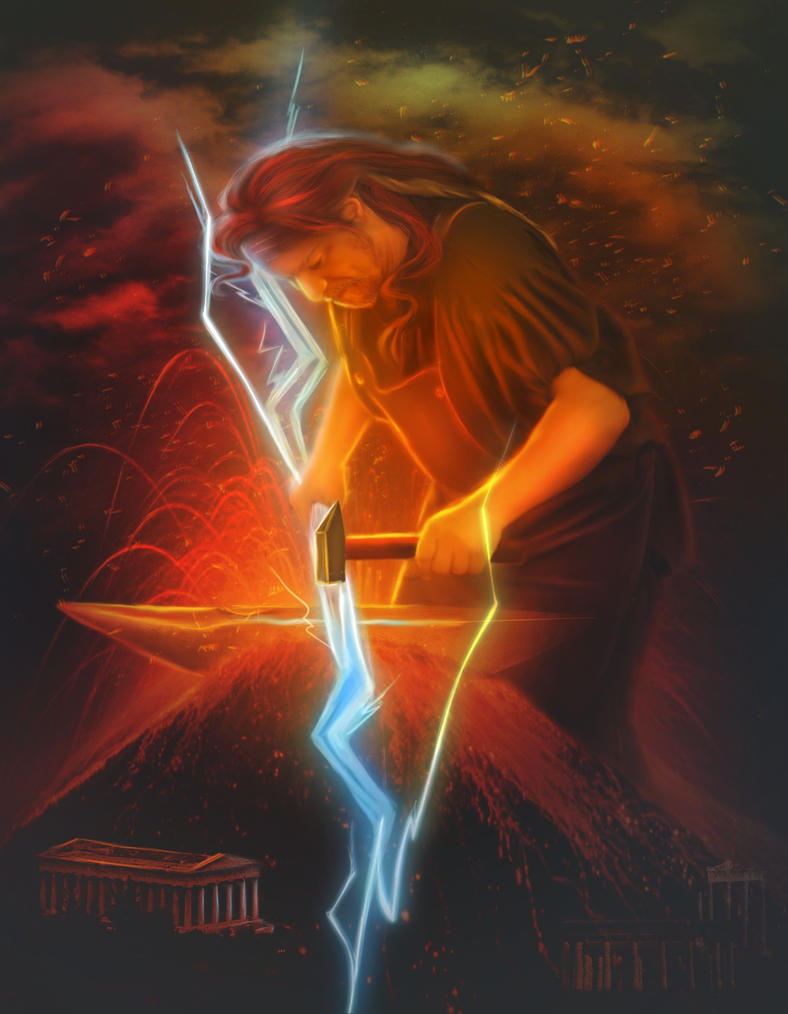
I mentioned a while back (here and here) how I liked that Unmasked really embraced Shifts as a tool rather than a set list of options. Part of that is that there are so many ways to use Shifts in this way that weren't really possible before. I like this not just for Unmasked, and not just for other super-heroic games, but especially because of what it means for Gods of the Fall. I think that this kind of approach will make it easier to generate god PCs and NPCs in Gods of the Fall because a godly dominion can be used nearly directly for the character's shifts.
Consider a god of Fire. Previously when gaining shifts one would allocate perhaps a shift to Resilience and two more to Power for a specific fire power. Instead you could allocate all three to God of Fire and this would allow true divine mastery over the dominion of fire. Instead of having 1 armor against all attacks and 1 step better with all Might Defense the character is now +3 armor against heat and fire and 3 steps better on Might defense to resists heat, fire, smoke, and the like. In addition in place of having a single fire power that is two steps better all of their Fire themed powers are now 3 steps better.
Sure, this may result in a little more "bang for the buck" but it's also balanced into the character's theme. This also means that the player can champion their theme where appropriate, and allows the GM the freedom to adjudicate as they see fit for their game. This paves the way for less traditional themes which may not have been as easy to work with previously. It also still leaves room for the player to take other shifts accordingly; your god of fire may also be exceptional dexterous, or may also have a lesser dominion over crafts (in the way Vulcan did as god of fire, volcanoes, metalworking, and the forge).
This also means that if a GM wanted to create special shifts related to a given pantheon they could. In real world mythology gods of a given pantheon tended to share certain traits. The gods of Egyptian myth, for instance, all had strong relationships with the realm of Duat, the realm of the death. A divine shift in this pantheon specific shift would allow the god to enter the underworld, and provide them with some level of ability over the souls of the dead, based on their theme.
Opening up the design space of power shift rules with the guidelines of being "Clear," "Restricted in scope," and "Indicative of the PC they are attached to" will really help both players and GMs to create interesting and unique characters with powers that strongly match their themes rather than forcing a character to bend to accommodate their shifts.
Subscribe to:
Posts (Atom)